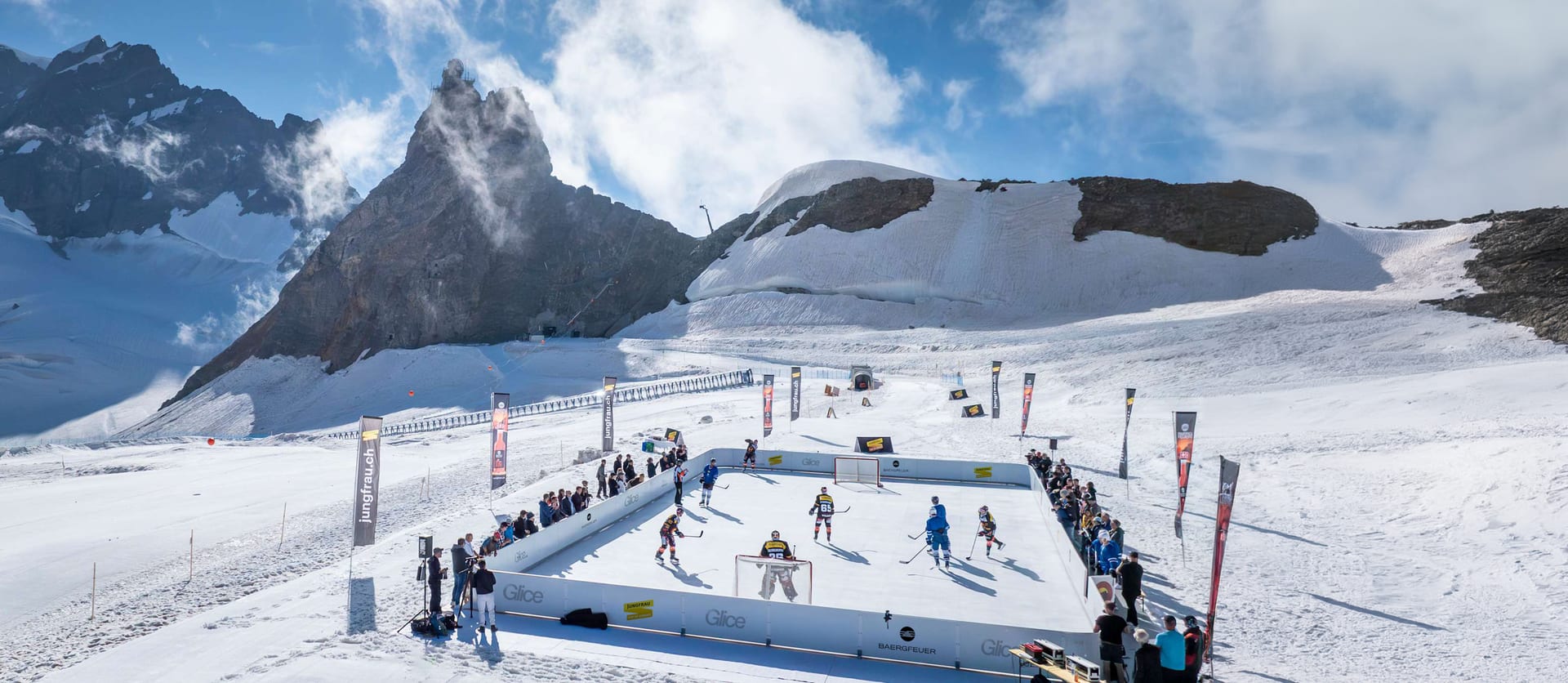
The next chapter of ice hockey
3-on-3 Ice Hockey: The Fast, Urban Future of the Game
Smaller rinks, fewer players, nonstop end-to-end action, and a surface that performs like real ice almost anywhere.
This is what 3-on-3 is, where the IIHF is taking it, the rinks it is played on, the organisers driving it worldwide, and why the move to synthetic ice puts Glice at the centre of the story.
This guide explains 3-on-3 ice hockey rules, IIHF and Olympic developments, approved rink dimensions, leading organizers, and why compact synthetic ice rinks suit the fast urban format.
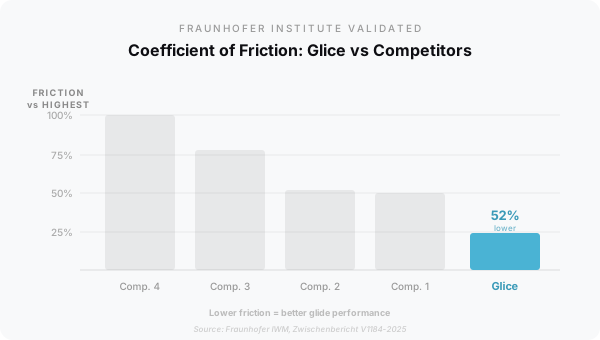
Glice is a Swiss-engineered synthetic ice rink system that delivers a real skating experience on regular ice skates, with no water and no electricity. Its solid polymer panels showed 52% less friction than the next-best synthetic ice in standardized Fraunhofer Institute testing, and are now installed in more than 3,000 rinks across 100+ countries.
Reviewed by Viktor Meier, Co-Founder & CEO, Glice AG · Last reviewed: August 2026
What Is 3-on-3 Ice Hockey?
Hockey, stripped back to its most thrilling essentials.
3-on-3 ice hockey is played with three skaters and a goaltender per side, on a surface far smaller than a full rink. Sometimes it is played cross-ice inside a standard rink, sometimes on a purpose-built compact rink placed in a city square. Born from the excitement fans feel during NHL and IIHF overtime, 3-on-3 keeps only the parts of the game that make people stand up: speed, skill, creativity, and open space.
With so much room, no player can hide in a fixed role. Everyone attacks and everyone defends, so the format rewards complete, all-round players and produces far more goals than the traditional five-on-five game. Matches are short and built for a festival atmosphere, which turns a small rink into a playground for the game and makes 3-on-3 ideal for new fans, new venues, and new markets. The rules are simplified to protect the pace: play often restarts immediately after a goal with no faceoff, several formats replace power plays with a penalty-shot chase, and open-ice body contact is limited to keep the game fast and safe.
- 3 skaters plus 1 goalie
- Small rink
- Short games
- More goals
- Limited body contact
- Restarts with no faceoff
Where the IIHF Stands, and the Recent Developments
From experiment to strategic priority.
The International Ice Hockey Federation, the world governing body of the sport, has moved 3-on-3 from a one-off experiment to a central part of its plans. The IIHF first tested the discipline at the Winter Youth Olympic Games in Lausanne in 2020 and again at Gangwon in 2024, using mixed-nation teams so that more countries could compete for Olympic hockey medals.
In 2024 the IIHF confirmed it was preparing a formal proposal to add 3-on-3 to the Winter Olympic programme, targeting the 2030 Games in the French Alps, with both men’s and women’s tournaments under consideration. President Luc Tardif has pointed to the way 3x3 basketball, rugby sevens, and beach volleyball lifted their parent sports, and framed 3-on-3 as hockey’s chance to do the same. The proposal was submitted to the International Olympic Committee in early 2025, and a decision on the 2030 programme is expected to follow the IOC’s review process.
-
2020
Lausanne Winter Youth Olympic Games
The IIHF tests 3-on-3 for the first time at an Olympic-movement event, using mixed-nation teams.
-
2024
Gangwon Winter Youth Olympic Games
The discipline returns, again with mixed-nation teams so more countries can compete for Olympic hockey medals.
-
2024
Olympic proposal prepared
The IIHF confirms it is preparing a formal proposal to add 3-on-3 to the Winter Olympic programme, targeting the 2030 Games in the French Alps, with men’s and women’s tournaments under consideration.
-
Early 2025
Submission to the IOC
The proposal goes to the International Olympic Committee. A decision on the 2030 programme is expected to follow the IOC’s review process, and inclusion is not yet decided.
-
April 2026
3x3 reaches the city centre
An IIHF-backed 3x3 tour opens in front of Olympiaworld Innsbruck, where national sides play on a compact outdoor rink inside a public fan zone, as part of the 50th anniversary of the 1976 Olympic Winter Games. It is the clearest sign yet that the IIHF intends 3-on-3 to be a permanent, televised property rather than only an Olympic side event.
Olympic inclusion for 2030 is a proposal under IOC review, not a confirmed decision.
Regulation and Approved IIHF 3-on-3 Rink Dimensions
One format, several approved surfaces.
3-on-3 does not use a single fixed rink size. Because the format is built to be flexible and deployable, the IIHF and its partners define the playing surface by competition tier. The officially documented configurations are set out below, with a standard rink shown for reference.
| Programme / format | Playing surface (as published) | Format notes | Source |
|---|---|---|---|
| Cross-ice 3-on-3 (Youth Olympic) | About 30 × 22.5 m of playing surfaceabout 98.4 × 73.8 ftThe end zone of a standard 60 × 30 m rink, played cross-ice, with two games running at the same time at opposite ends. The end-zone figure is derived from the standard rink, not published by the IIHF. | 3 skaters plus goalie; three 16-minute periods; no body-checking | IIHF Cross-Ice 3-on-3 Game Manual |
| Olympic 3x3 proposal (small ice) | 26 × 18 m85.3 × 59.1 ftDedicated ice pad, compared with a standard 60 × 30 m rink | Standard boards and benches on a smaller pad | IIHF, Nov 2024 |
| City-centre 3x3 tour | 20 × 40 m65.6 × 131.2 ft | 3 skaters plus goalie; two 12-minute halves; restart with no faceoff; penalty-shot chase | IIHF 3x3 FAQ, season 2026 |
| Professional 3x3 league | 17 × 34 m minimum to 25 × 45 m maximum55.8 × 111.5 ft to 82.0 × 147.6 ft | IIHF-backed pro league; Europe from 2027, global from 2028 | IIHF 3x3 FAQ, season 2026 |
| Reference: standard IIHF rink | 60 × 30 m196.9 × 98.4 ft | Full five-on-five, not a 3-on-3 size, shown for scale | IIHF |
Orientation, meaning which figure is length and which is width, is not stated consistently across the published sources. Each figure therefore appears exactly as published, with its source label kept on it. There is no single official 3-on-3 number: approved dimensions vary by programme.
All five diagrams are drawn to the same scale, so the pads can be compared directly. Each rink is drawn from its published figures; because orientation is not consistently published, the diagrams show the shape and the area, not which side is the official length.
Who Organises 3-on-3 Games?
The bodies driving 3-on-3 around the world, oldest first.
The list runs chronologically, by the year each organiser first put 3-on-3 on the ice. Standing is a separate question from age: the Winter Youth Olympic Games remain the most prestigious stage, while the newest entry carries the most institutional weight. Exact game counts are not published in one place, so treat any comparison of volume between organisers as an informed estimate.
-
Latvian 3x3 Hockey Federation, known as Hype Hockey
The Baltic programme, and the longest-running organiser
The earliest organiser on this list. Its founders began with 3-on-3 test matches in Riga in 2019, and the Latvian 3x3 Hockey Federation was formally established on 10 November 2021, based in Mārupe, Latvia. The federation reports 207 games and 1,030 participants over its first four years, which is its own count rather than an audited figure. In July 2026 it staged the inaugural 3x3 Hype Hockey 8 Nation Cup at the Xiaomi Arena in Riga, with eight national teams and no traditional body checking; the Czech Republic won, ahead of Slovakia and Latvia.
- Test matches from 2019
- Federation founded 2021
- Latvia, Riga and Mārupe
- 8 Nation Cup, July 2026
-
IIHF Winter Youth Olympic Games 3-on-3
The most prestigious stage
Official Olympic-movement events, held at Lausanne 2020 and Gangwon 2024 with dozens of nations, played cross-ice with mixed-nation teams. Few editions, but unmatched credibility, and the proving ground that put 3-on-3 on the Olympic radar.
- Lausanne 2020
- Gangwon 2024
- Olympic movement
-
3ICE
The most games staged in North America
Founded by E.J. Johnston and launched in 2022, 3ICE has run multiple summer seasons of weekly one-day tournaments across North American cities, with United States broadcast on CBS Sports and Canadian coverage on TSN and RDS, and a one-million-dollar Patrick Cup. After pausing in 2024 it returned in 2025, with a 3ICE World Cup planned for Belfast in July 2026.
- Launched 2022
- Multi-city, North America
- CBS Sports, TSN, RDS
- World Cup, Belfast, July 2026
-
Major League Hockey (MLH)
Announced, no games staged to date
An ambitious proposed professional 3-on-3 league that has repeatedly postponed its debut. It is listed by the year of its announced launch rather than by any games played, and it is included for completeness.
- Announced launch 2024
- No games staged
- Status to verify before publication
-
IIHF-backed 3x3, run with Ultimate Hockey AG
The newest, and the most institutional weight
The most recent arrival and the only one backed by the sport's world governing body. It combines a global city-centre tour, which opened in Innsbruck in April 2026, with a professional league scheduled for Europe from 2027 and worldwide from 2028. Newest in games played, but the entry that sits on the pathway to a possible Olympic debut.
- IIHF-backed
- Tour opened April 2026
- League: Europe 2027, global 2028
Order of appearance is not a ranking of importance. Where a figure comes from an organiser's own reporting rather than an independent count, the page says so.
The Big Move: 3-on-3 on Synthetic Ice
Everything that makes 3-on-3 special points to one surface.
Deployable anywhere the game wants to go
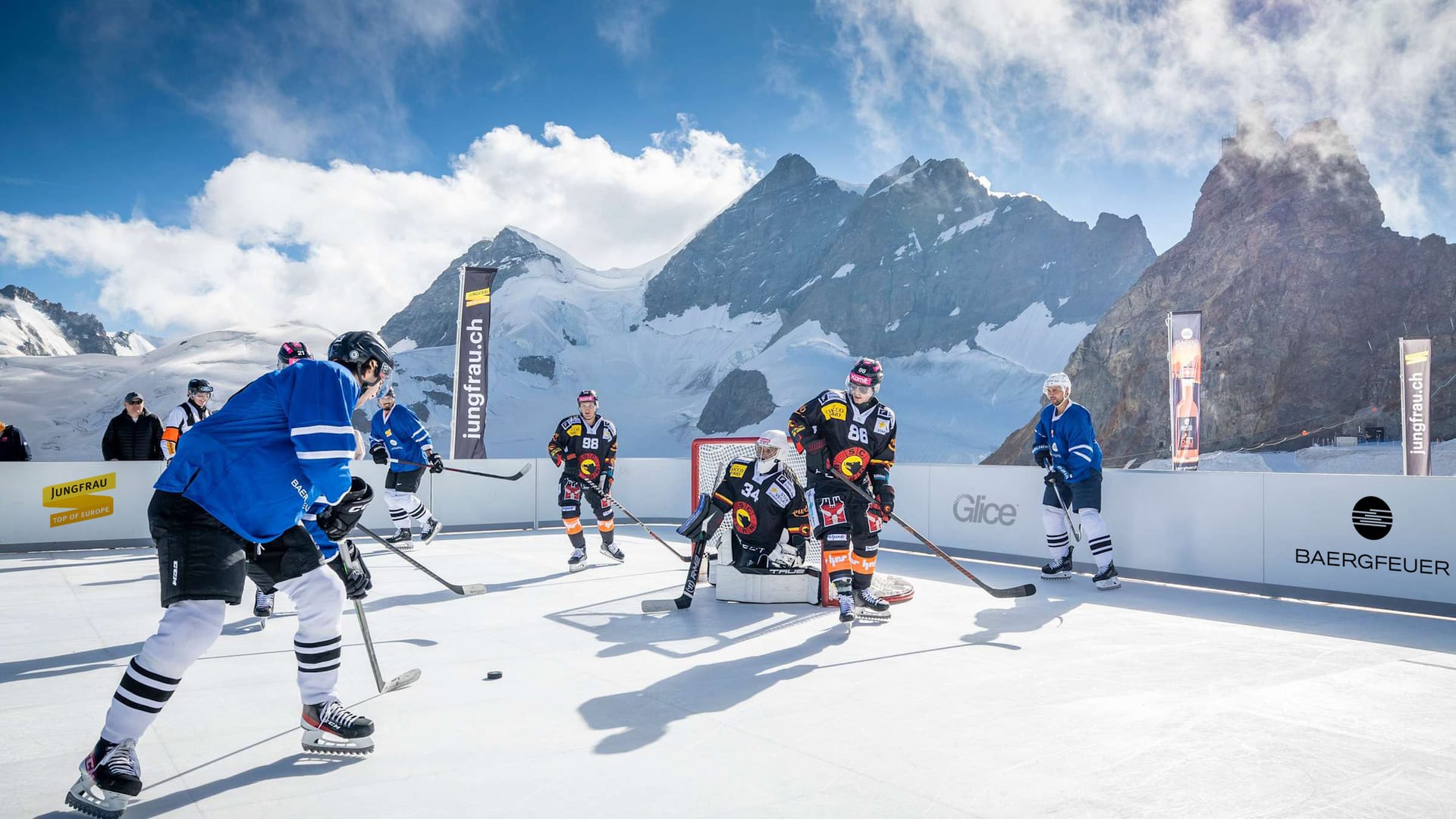
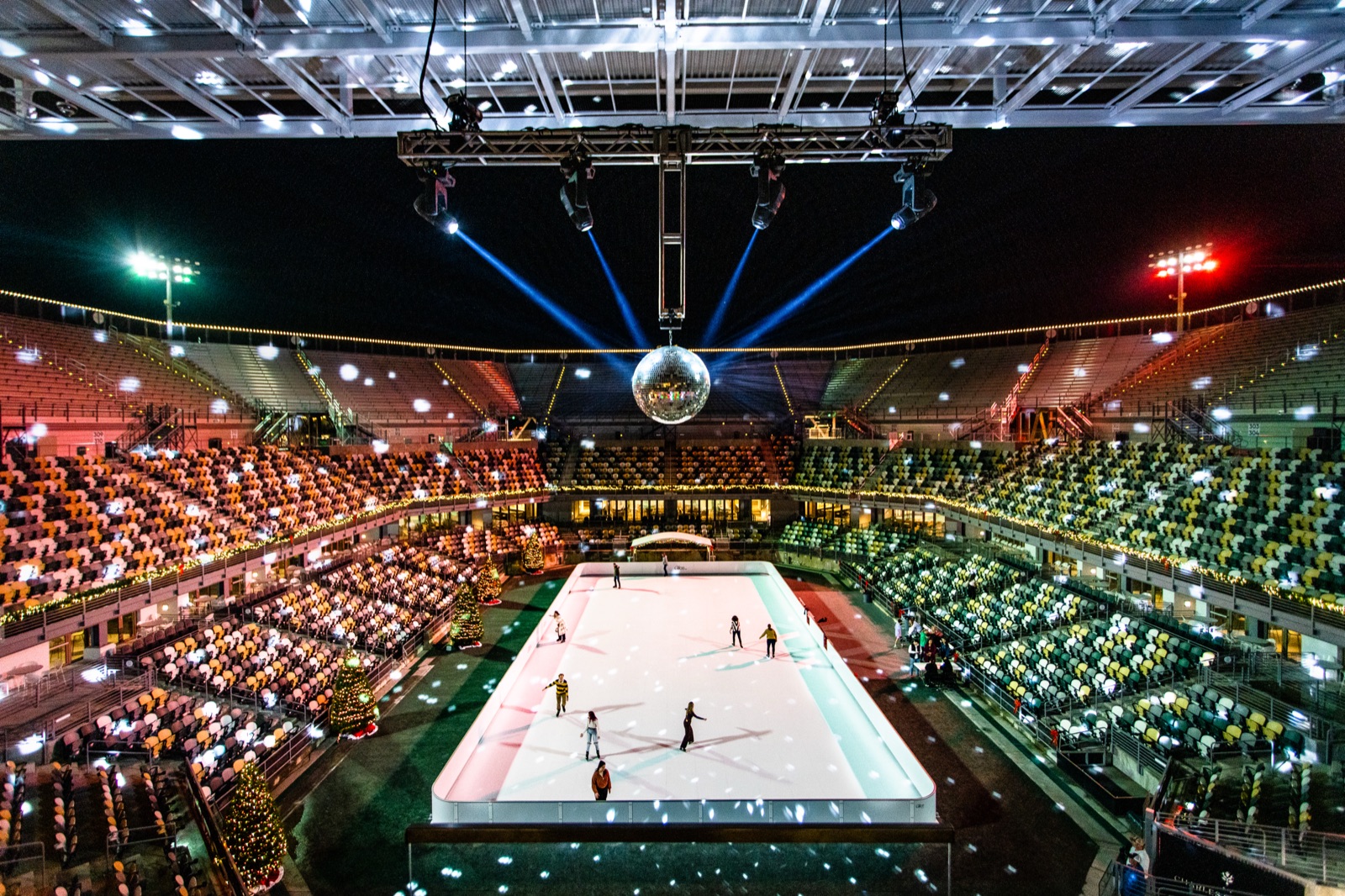
3-on-3 is built for city squares, festivals, malls, rooftops, and pop-up arenas, the very places a refrigerated ice sheet cannot easily go. Each of them becomes a hockey playground for a weekend. Synthetic ice removes the refrigeration, the energy load, and the location limits, so an official-standard rink can appear in a town centre in spring, run all weekend, and be gone by Monday. As the first city-centre 3x3 tour has already shown, the future of 3-on-3 is outdoors, urban, and deployable, and that future runs on synthetic ice.
- No refrigeration and no chiller plant
- Any location, indoor or outdoor
- Fast install and fast removal
- Zero-energy skating surface and sustainable operation
Not all synthetic ice is equal
Players want to glide on Glice, not plough through plastic. In standardized testing at the Fraunhofer Institute, Europe’s largest applied research organisation, Glice showed 52% less friction than the next-best synthetic ice, 45% less blade penetration, and 6% less abrasion, the lowest shavings output measured in the category. Against refrigerated ice, the same testing found the surface reaches a friction coefficient equivalent to real ice at lower skating speeds. For a game defined by speed and creativity, surface quality is not a detail. It is the difference between a spectacle and a compromise.
- 52% less friction than the next-best synthetic ice
- 45% less blade penetration, so the blade glides instead of ploughing
- 6% less abrasion, the lowest shavings output in the category
- Friction equivalent to real ice at lower skating speeds
A rink can appear in a town centre in spring, run all weekend, and be gone by Monday.
Glice: Predestined to Be the Premier 3-on-3 Surface
The prime supplier of official 3-on-3 ice rinks.
With glide measured at 52% less friction than the next-best synthetic ice, zero-refrigeration deployment, premium aesthetics, and a proven presence in 100+ countries across more than 3,000 rinks, Glice is built to be the premier surface for official 3-on-3 hockey. Glice already engineers complete, turnkey rink systems, from pro rinks to compact training and home rinks, and can configure any of the officially documented 3-on-3 dimensions.
That makes Glice a natural prime supplier of the official 3-on-3 ice rinks the sport now needs: for tour stops, league venues, national-federation programmes, and grassroots playgrounds alike. As 3-on-3 scales from a city square toward a possible Olympic debut, Glice is ready to be the surface it is played on.
Talk to an Expert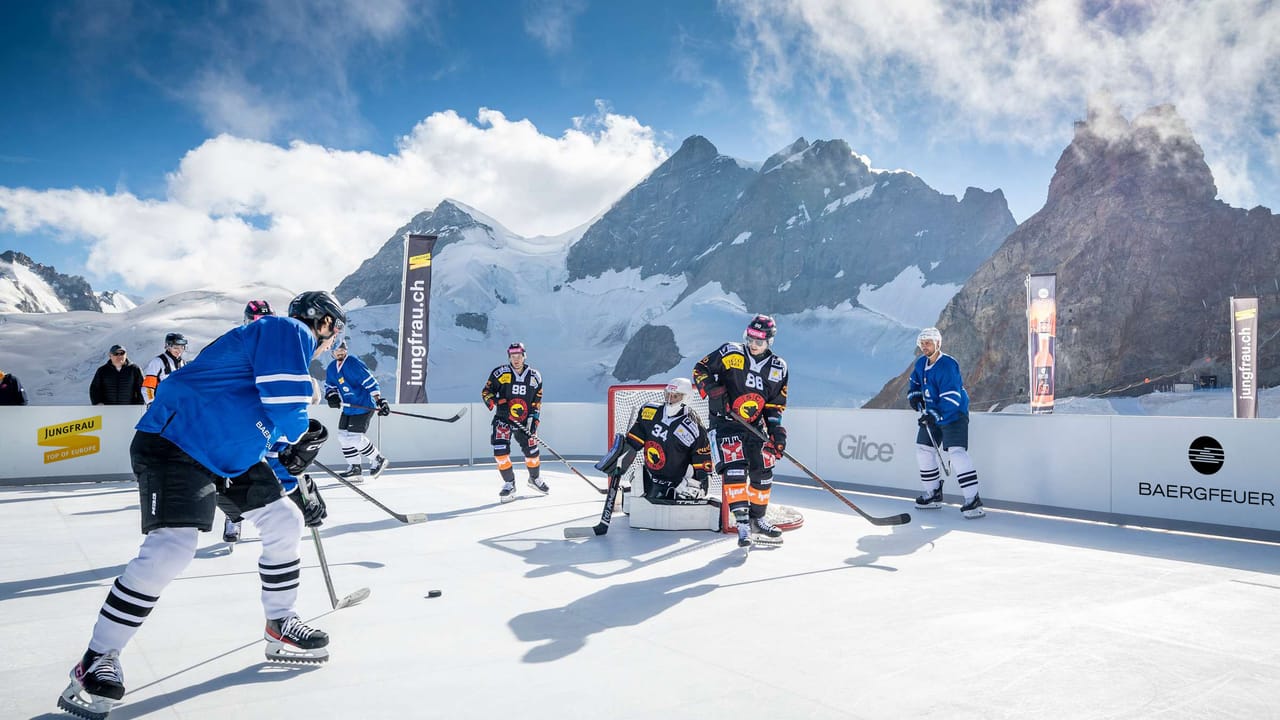
Our 3-on-3 Rink Systems
One surface, configured for every level of the game. Each 3-on-3 setup below can be built with Glice, from a cross-ice playground to a full pro-league rink.
3-on-3 Glice Hockey Rink 30 × 22 m
Cross-ice, inside a 60 × 30 m rink
The IIHF's original 3-on-3 format, two games at once in the two end zones of a standard rink.
3-on-3 Glice Hockey Rink 18 × 26 m
Olympic small ice
The compact pad configuration proposed for the Olympic stage.
3-on-3 Glice Hockey Rink 20 × 40 m
City-centre tour surface
The touring surface used for city-centre 3x3, made for outdoor, urban events.
3-on-3 Glice Hockey Rink 17 × 34 m
Pro league, 17 × 34 m to 25 × 45 m
The professional-league configuration range, indoor or outdoor.
Glice Pro Rink – Professional Synthetic Ice Rink
Add serious ice time to your facility. Available in any dimension and configuration.
Glice Hockey Training Rink – Hockey Training Surface
Dedicated hockey training surface for skill development. Available in any dimension and configuration.
Glice Home Rink – Synthetic Ice Rink for Home
Professional training at home, every day. Available in any dimension and configuration.
Glice Skatemill – Ice Skating Treadmill
Stride and speed training on a moving surface. Fits where a rink cannot.
Not sure which 3-on-3 setup fits your event or venue? We’ll help you choose.
Talk to an Expert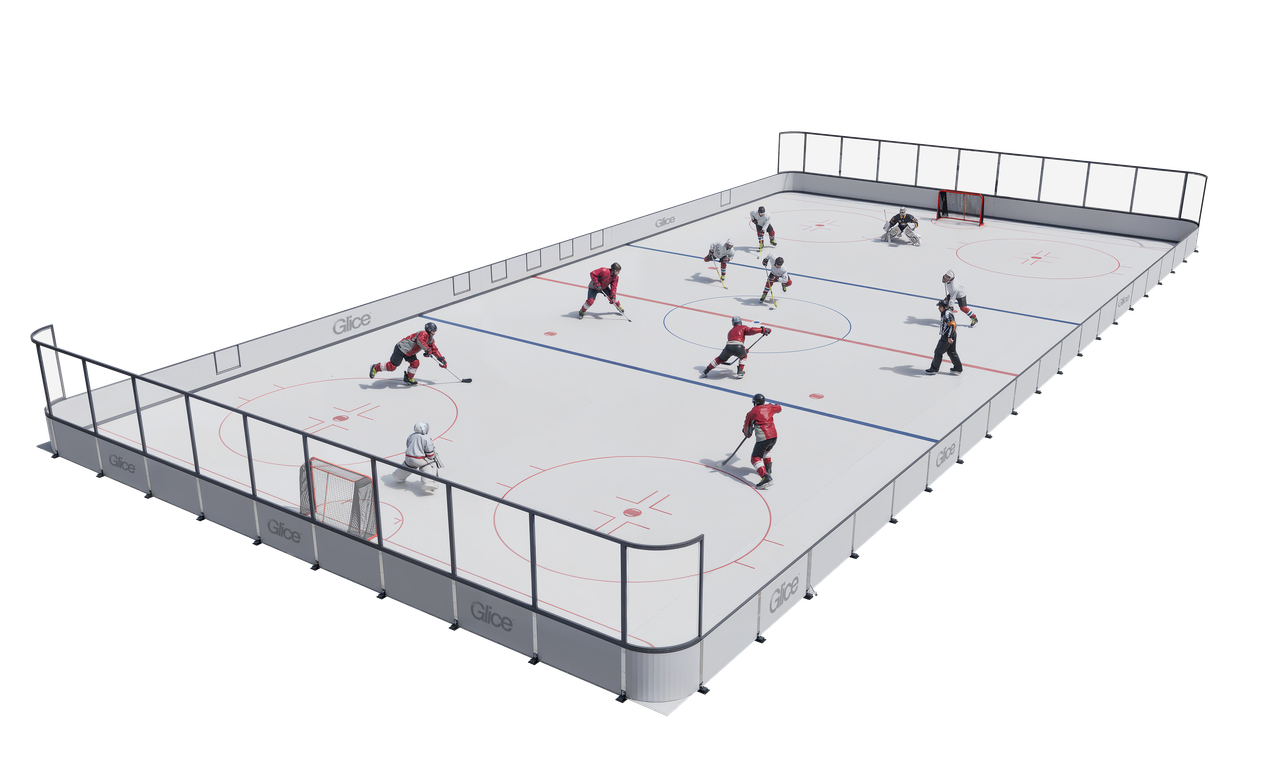
Glice Pro Rink
Glice Panels
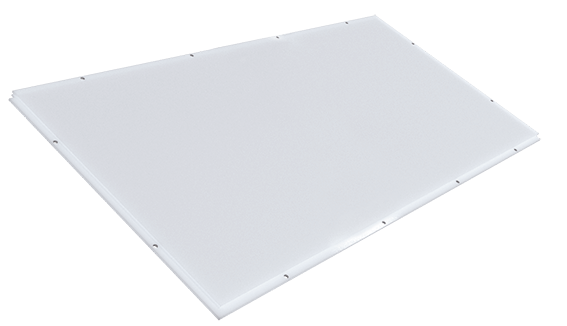
Swiss-engineered synthetic ice, with glide independently lab-proven by the Fraunhofer Institute.
Olympic Cleaning System
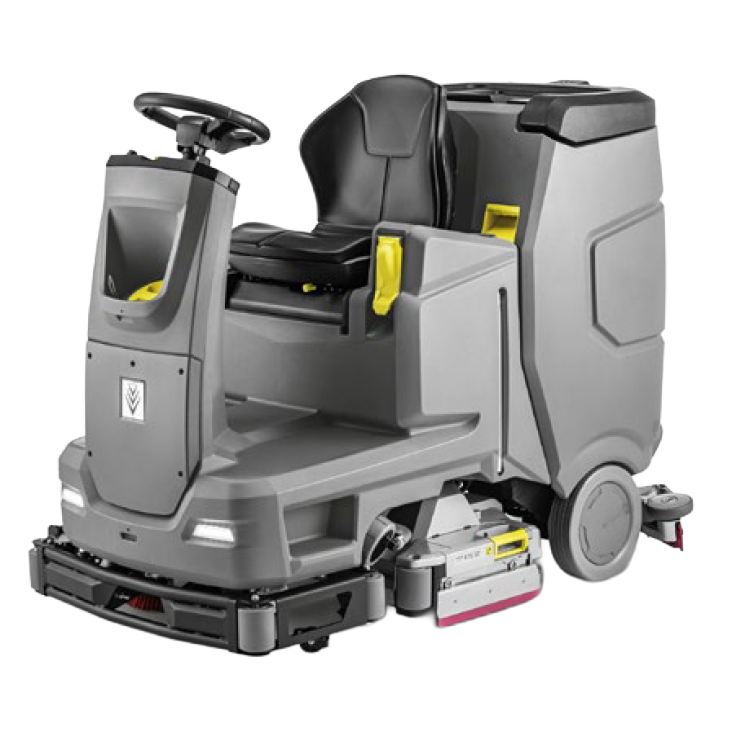
High-performance & easy to use. Keeps your rink in pristine condition.
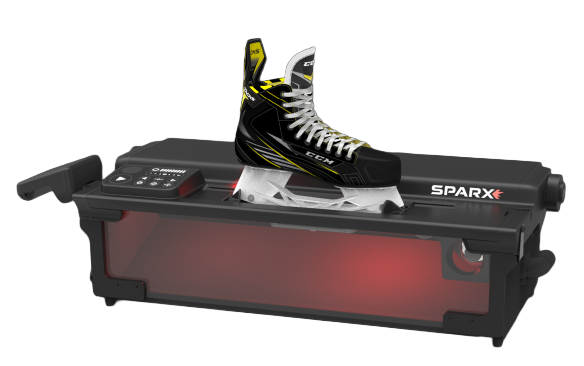
Skate Sharpener
Sharpening made easy. Press one button and go!

Blade Guard Flooring
Protect your blades with eco-friendly rubber flooring

Rink Board
Freestanding rink barrier, stable base, easy setup, professional finish.
Questions and Answers.
What is 3-on-3 ice hockey?
3-on-3 ice hockey is played with three skaters and a goaltender per side, on a surface far smaller than a full rink. It is sometimes played cross-ice inside a standard rink and sometimes on a purpose-built compact rink placed in a city square. Matches are short, the rules are simplified to protect the pace, and the format produces far more goals than the traditional five-on-five game.
What size is a 3-on-3 ice hockey rink?
There is no single fixed size, because approved surfaces are defined by competition tier. The cross-ice Youth Olympic format uses the end zone of a standard 60 × 30 m rink, which works out at roughly 30 × 22.5 m of playing surface. The Olympic 3x3 proposal describes a 26 × 18 m dedicated ice pad. The city-centre tour surface is published as 20 × 40 m. The professional-league range runs from 17 × 34 m as a minimum to 25 × 45 m as a maximum. Each published figure is quoted exactly as published.
Is 3-on-3 ice hockey in the Winter Olympics?
Not yet. In 2024 the IIHF confirmed it was preparing a formal proposal to add 3-on-3 to the Winter Olympic programme, targeting the 2030 Games in the French Alps, and the proposal was submitted to the International Olympic Committee in early 2025. A decision on the 2030 programme is expected to follow the IOC’s review process. 3-on-3 has already been played at the Winter Youth Olympic Games, at Lausanne 2020 and Gangwon 2024.
How big is the cross-ice 3-on-3 playing area?
The IIHF cross-ice format uses the end zone of a standard 60 × 30 m rink, with two games running at the same time at opposite ends. The IIHF does not publish a separate figure for that end zone, but it can be derived from the standard rink: on an IIHF sheet the blue lines sit a quarter of the rink’s length apart, so the neutral zone takes 15 m and each end zone is about 22.5 m deep across the full 30 m width. Cross-ice play therefore uses roughly 30 × 22.5 m, with the goals on the two long side boards. Treat that as derived from the standard rink, not as an IIHF-published 3-on-3 dimension.
Who organises 3-on-3 ice hockey worldwide?
In order of appearance: the Latvian 3x3 Hockey Federation, known as Hype Hockey, whose founders ran test matches in Riga from 2019 and which was formally established in 2021; the IIHF Winter Youth Olympic Games 3-on-3 events at Lausanne 2020 and Gangwon 2024; 3ICE, launched in North America in 2022; Major League Hockey, announced for 2024 but with no games staged to date; and an IIHF-backed 3x3 tour and league, run with Ultimate Hockey AG, which opened in 2026.
Does 3-on-3 hockey use faceoffs and power plays?
The rules are simplified to protect the pace. Play often restarts immediately after a goal with no faceoff, several formats replace power plays with a penalty-shot chase, and open-ice body contact is limited to keep the game fast and safe. The IIHF cross-ice manual sets three 16-minute periods with no body-checking, while the city-centre tour format plays two 12-minute halves.
Can 3-on-3 hockey be played on synthetic ice?
Yes, and the format is unusually well suited to it. 3-on-3 is built for city squares, festivals, malls, rooftops and pop-up arenas, the very places a refrigerated ice sheet cannot easily go. Synthetic ice removes the refrigeration, the energy load and the location limits, so an official-standard rink can appear in a town centre, run all weekend, and be removed afterwards.
How does Glice compare with other synthetic ice, and with real ice?
Two comparisons matter. Against other synthetic ice, standardized testing at the Fraunhofer Institute for Mechanics of Materials IWM measured 52% less friction than the next-best synthetic ice, 45% less blade penetration, and 6% less abrasion, the lowest shavings output in the category. Against refrigerated ice, the same testing found the Glice surface reaches a friction coefficient equivalent to real ice at lower skating speeds. Source: Fraunhofer IWM, Zwischenbericht V1184-2025.
What is a 3-on-3 hockey playground?
It is a compact rink, small enough to drop into a square, a park, a mall or a schoolyard, where 3-on-3 is played instead of full five-on-five hockey. The playground idea is what makes the format travel: three skaters and a goaltender per side need only a fraction of a full sheet, so the game can be set up where people already are. On synthetic ice a 3-on-3 playground needs no refrigeration, no water and no electricity for the surface, so it can be permanent in a park or temporary for a weekend event.
Can Glice build an official-standard 3-on-3 rink?
Glice engineers complete, turnkey rink systems and can configure any of the officially documented 3-on-3 dimensions, from a cross-ice pop-up inside a standard rink to a full professional-league pad. Glice rinks need no refrigeration, no water and no electricity for the skating surface, which is what makes tour stops and city-centre venues possible.
Key facts
- Players: three skaters plus a goaltender per side.
- Governing body: the International Ice Hockey Federation, the world governing body of the sport.
- Olympic status: a proposal for the 2030 Winter Games, submitted to the IOC in early 2025 and still under review. Not confirmed.
- Youth Olympic editions: Lausanne 2020 and Gangwon 2024, played with mixed-nation teams.
- Cross-ice format: the end zone of a 60 × 30 m rink, roughly 30 × 22.5 m of playing surface, three 16-minute periods, no body-checking.
- City-centre tour surface: 20 × 40 m, two 12-minute halves, restart with no faceoff, penalty-shot chase. Opened in Innsbruck, April 2026.
- Professional-league range: 17 × 34 m minimum to 25 × 45 m maximum. Europe from 2027, global from 2028.
- Longest-running organiser: the Latvian 3x3 Hockey Federation, known as Hype Hockey, with test matches in Riga from 2019.
- Surface performance: Fraunhofer IWM measured 52% less friction than the next-best synthetic ice, 45% less blade penetration and 6% less abrasion, with friction equivalent to real ice at lower skating speeds. Source: Zwischenbericht V1184-2025.
Sources
- IIHF 3x3 Ice Hockey hub
IIHF prepares Olympic 3x3 proposal, November 2024, for the 26 × 18 m pad and the timeline
IIHF 3x3 FAQ, season 2026, for the 20 × 40 m tour rink, the 17 × 34 m to 25 × 45 m league range, and the format
IIHF: the 3x3 tour starts in Innsbruck, April 2026
IIHF Cross-Ice 3-on-3 Game Manual, for the cross-ice format, three 16-minute periods and no body-checking
IIHF: Breaking down 3-on-3, the Youth Olympic primer
- ESPN: IIHF preparing 3-on-3 proposal for the 2030 Olympics
- The Hockey News: 3-on-3 at the 2030 Winter Olympics
- Sports Destination Management: 3-on-3 pushing for Olympic inclusion
3ICE, for the league history, seasons, broadcast partners, Patrick Cup and the 2026 World Cup
Latvian 3x3 Hockey Federation, about us, for the 2019 test matches, the 10 November 2021 founding, and the federation's own count of 207 games and 1,030 participants
3x3 Hype Hockey 8 Nation Cup, Xiaomi Arena Riga, for the July 2026 tournament and its result
Fraunhofer IWM, Zwischenbericht V1184-2025, for the friction, blade-penetration and abrasion figures. See also the Fraunhofer IWM press release on synthetic ice glide properties and Glice: best synthetic ice
Glice: hockey rink dimensions, for the standard rink reference and the blue-line spacing used to derive the cross-ice end zone
Olympic inclusion for 2030 is a proposal under IOC review, not a confirmed decision. Cross-organiser comparisons of games staged are informed estimates, because exact game counts are not published in one place. The roughly 30 × 22.5 m cross-ice figure is derived from the standard rink, not published by the IIHF as a 3-on-3 dimension.