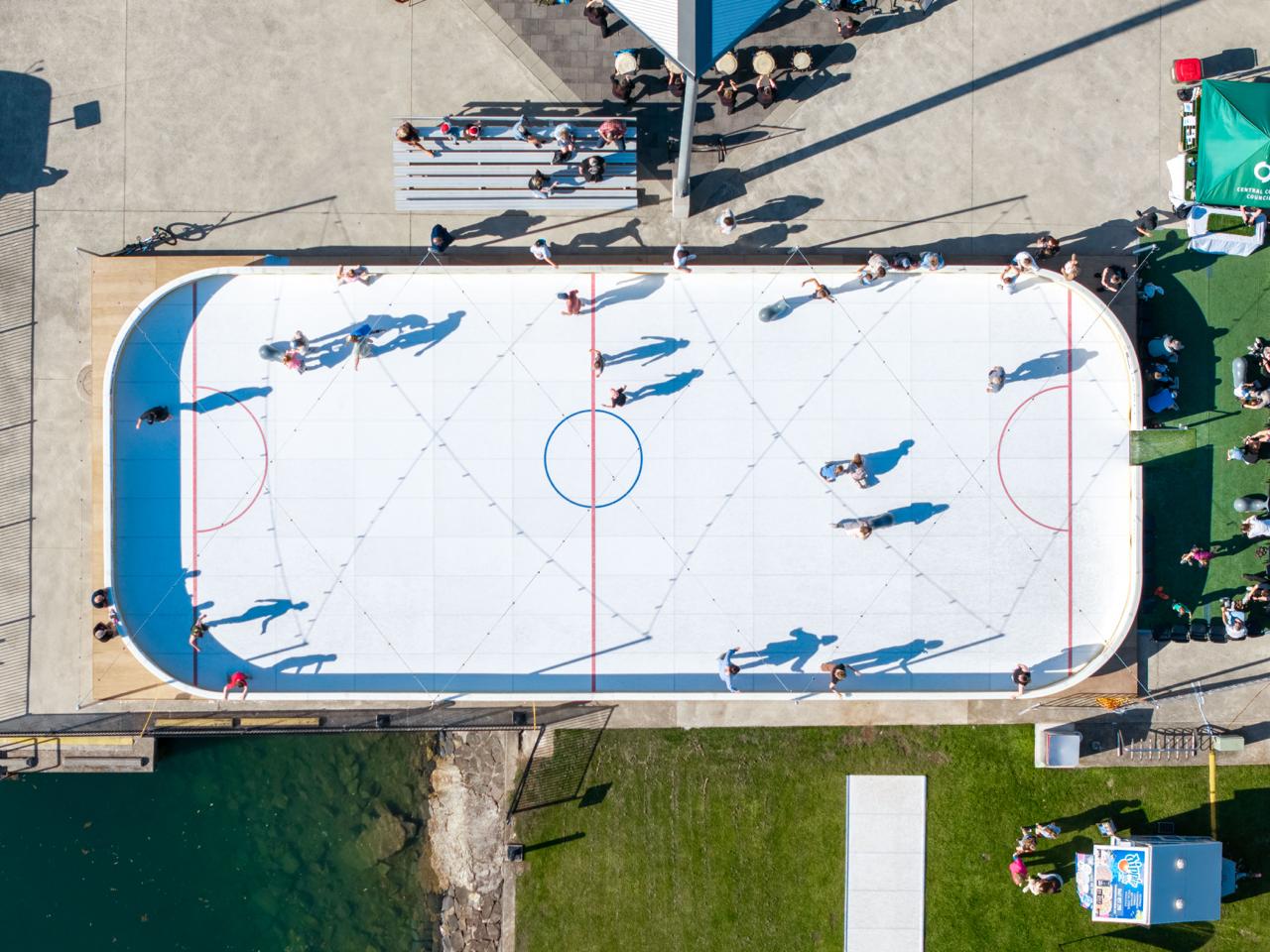
If you've ever wondered why an Olympic hockey game looks a little more “open” than an NHL game, the answer isn't the players — it's the ice. There are two official rink sizes in the hockey world, and the 15-foot difference between them changes the entire pace of the game.
Here's the quick answer, followed by everything else you'd want to know if you're building, coaching for, or just curious about a rink.
Hockey rink dimensions at a glance
| Rink type | Length | Width | Corner radius |
|---|---|---|---|
| NHL / North American | 200 ft (61 m) | 85 ft (25.9 m) | 28 ft (8.5 m) |
| IIHF / Olympic / International | 196.9 ft (60 m) | 98.4 ft (30 m)* | 27.9 ft (8.5 m) |
| NCAA college | 200 ft | 85 ft | — |
| High school (NFHS, US) | 200 ft | 85 ft | — |
| Youth mini-mite / cross-ice | Varies; roughly 80–100 ft × 40–66 ft | — | |
*IIHF rules technically allow a width range of 85.3–98.4 ft (26–30 m); 98.4 ft (30 m) is commonly used at Olympic and top-level international events and often rounded to “200 × 100 ft.”
NHL vs. Olympic: why the width is different
An NHL rink measures 200 feet long by 85 feet wide — a total playing surface of about 17,000 square feet. The corners are rounded with a 28-foot radius, the goal line sits 11 feet from the end boards, and the two blue lines are 75 feet from the end boards and 50 feet apart, splitting the ice into defensive, neutral, and offensive zones.
International and Olympic rinks, governed by the IIHF, use the same 200-foot (60 m) length but a wider ice sheet — typically 98.4 feet (30 m) — with blue lines set a quarter of the rink's length apart. That extra ~13 feet of width doesn't sound like much until you're skating on it: it opens up passing lanes, rewards speed and puck possession over open-ice hitting, and is a big part of why international hockey is often described as a more skill-and-space game than the NHL's tighter, more physical style.
How thick is the ice?
NHL ice is typically kept at around ¾ inch (roughly 19 mm) thick — thin by design, because thinner ice is harder and faster, which suits the NHL's high-speed style. It's built up in very thin layers sprayed one at a time. The rink logos and lines are painted partway through and then sealed under later layers, sitting on a chilled concrete slab cooled by a brine refrigeration system underneath.
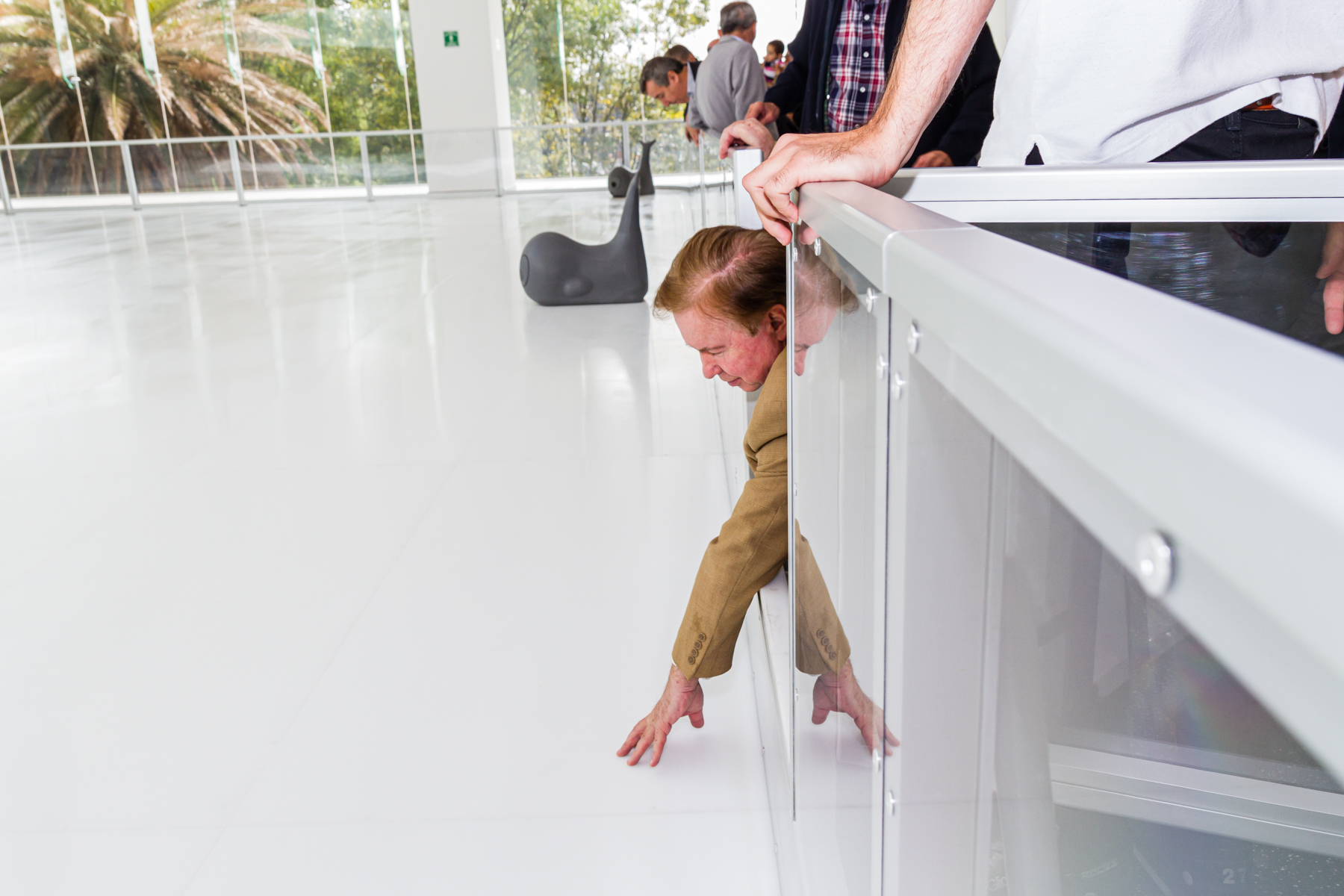
Some international and outdoor rinks run slightly thicker ice for durability, and outdoor community rinks exposed to real winter weather can be several inches thick out of necessity. Either way, thickness is a maintenance and refrigeration decision, not a rulebook requirement — there's no official “legal” ice thickness the way there is a legal rink width.
For a closer look at rink construction, see how ice rinks are made.
Does college or youth hockey use different dimensions?
Mostly not, with some flexibility at the edges:
- NCAA: there's no leaguewide mandate on rink size, so most college programs play on standard 200 × 85 ft NHL ice, though a handful of programs use a wider, international-style sheet.
- US high school (NFHS): recommends the standard 200 × 85 ft NHL dimensions.
- Youth hockey: full-ice youth games generally use the same 200 × 85 ft sheet, but many associations run cross-ice or half-ice formats for younger age groups so beginners get more puck touches. Exact dimensions vary by association.
Do you actually need a regulation-size rink?
Here's where the rulebook stops being useful, because almost nobody outside a professional or college program is building a 17,000-square-foot ice surface. If you're a rink operator, school, hospitality venue, or someone dreaming of ice at home, the real question isn't “what's regulation” — it's “what fits the space and budget I actually have.”
That's the constraint real ice runs into every time: once you pour a refrigerated slab, you're largely locked into that footprint. Resizing a real-ice rink means jackhammering concrete and rebuilding the refrigeration plant underneath it.
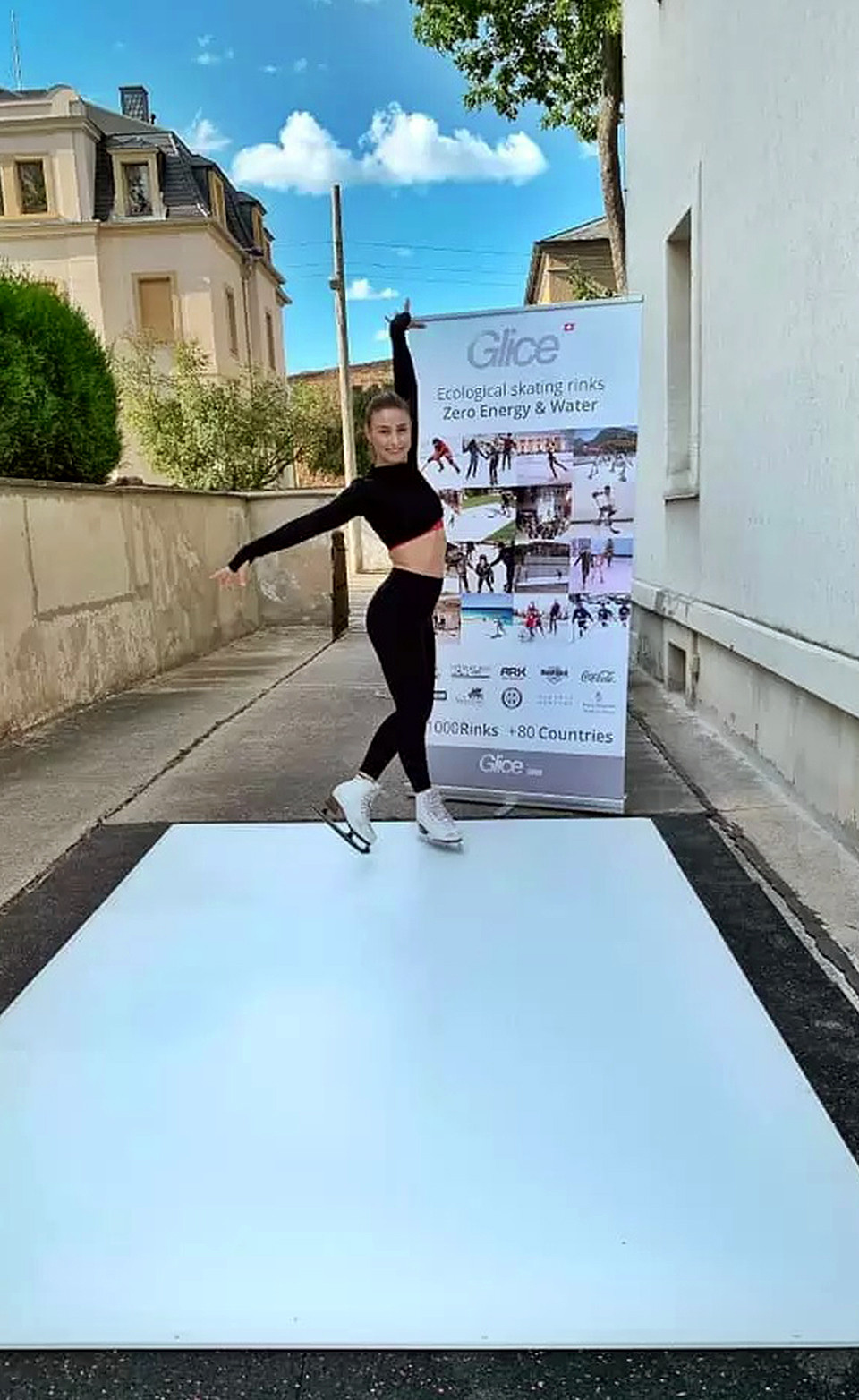
Synthetic ice doesn't have that problem. Because Glice's panels are modular, a rink can be sized to whatever space is available — a full regulation sheet for a training facility, a half-rink for a youth program running small-area games, or a compact setup that fits a garage, basement, or backyard — without pouring concrete or running a chiller plant.
A few sizing examples
- Home/backyard training setup: a two-car-garage-sized area or modest backyard corner can be plenty for stickhandling, shooting, and skating-stride work.
- Multi-use training facility: mid-size layouts give room for small-area games and multiple players without needing a full 200 × 85 ft sheet.
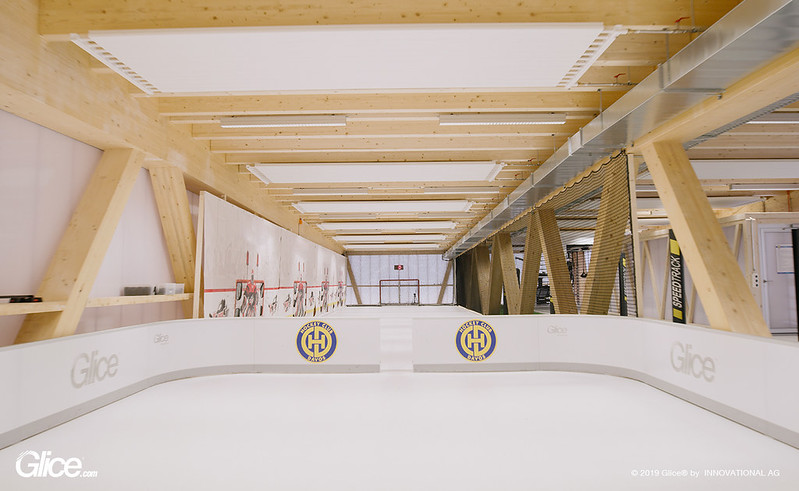
- Full regulation training rink: a synthetic sheet can match the 200 × 85 ft NHL footprint or the international 200 × 98.4 ft footprint — without the refrigeration overhead.
Explore Glice options for hockey training and residential rinks.
The bottom line
- NHL rinks: 200 × 85 ft (61 × 25.9 m)
- Olympic/IIHF rinks: 200 × ~98.4 ft (60 × 30 m)
- Ice thickness is a maintenance choice, not a rule — NHL ice runs about ¾ inch
- Most college, high school, and full-ice youth hockey uses NHL dimensions; younger youth programs often play cross-ice or half-ice
- Regulation size matters for competitive play. For training, home use, or venues without room for a refrigerated slab, the right size is whatever fits your space.
Frequently asked questions
What is the difference between an NHL rink and an Olympic rink?
An NHL rink measures 200 feet by 85 feet, while an IIHF/Olympic rink is the same 200-foot length but typically 98.4 feet wide. The extra width creates more skating and passing room.
How thick is the ice on a hockey rink?
NHL ice is typically about ¾ inch (19 mm) thick, built in thin sprayed layers over a chilled concrete slab.
What are the official dimensions of an NHL rink?
An NHL rink is 200 feet long by 85 feet wide, with a 28-foot corner radius.
Do college and youth hockey rinks use different dimensions?
Most college and high school programs use NHL dimensions. Younger youth players often use cross-ice or half-ice formats, with exact sizes varying by association.
Not sure what size fits your space?
Tell us where you want to skate and what you want to do. Our team will recommend a rink footprint built around your goals.
Get a custom rink recommendation →