Footfall
Turn the rink into a visible reason to enter the centre.
For shopping malls
A shopping centre does not buy a rink for ticket revenue; it buys footfall, dwell time and a reason to be talked about. This page is about why regular synthetic ice rarely delivers that, and why the quality premium protects the whole reason the rink is there.
Evaluate a shopping mall ice rink as a driver of footfall, dwell time, tenant sales, publicity, and seasonal experience, and learn why skating quality determines whether those commercial benefits materialize.
Glice is a Swiss-engineered synthetic ice rink system that delivers a real skating experience on regular ice skates, with no water and no electricity. Its solid polymer panels showed 52% less friction than the next-best synthetic ice in standardized Fraunhofer Institute testing, and are now installed in more than 3,000 rinks across 100+ countries.
Reviewed by Viktor Meier, Co-Founder & CEO, Glice AG · Last reviewed: August 2026
What quality protects
Turn the rink into a visible reason to enter the centre.
Give visitors a reason to remain in the centre for longer.
Create more opportunities for on-site transactions.
Give advertisers an attraction worth returning to.
A centre is buying footfall, dwell time and the knock-on lift to tenant sales, plus the media and social reach a winter attraction generates.
A centre is buying footfall, dwell time and the knock-on lift to tenant sales, plus the media and social reach a winter attraction generates. The rink is rarely the profit centre itself. It is the thing that pulls people through the doors and keeps them inside longer, and a longer visit means more transactions and a stronger case at the next lease renewal.
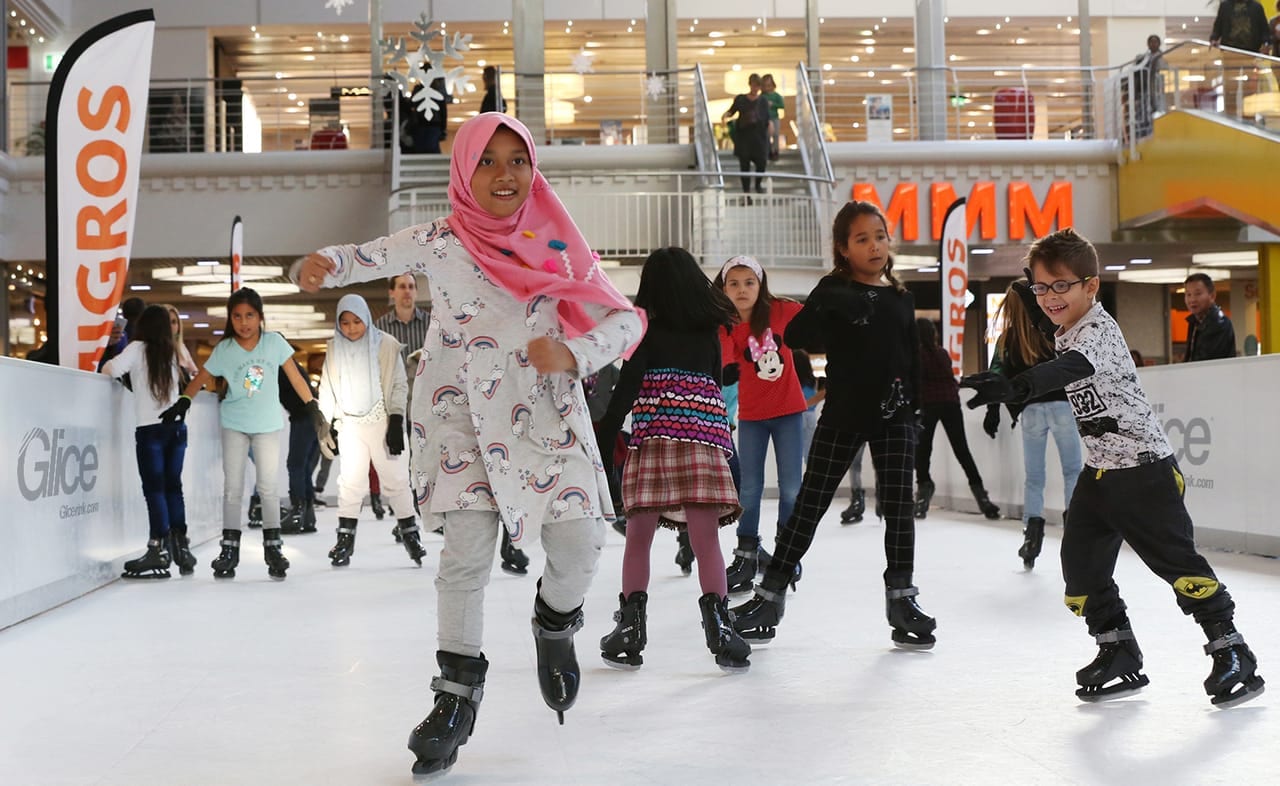
The rink sits on display in the concourse, in front of the exact audience the centre wants to convert. About 80% of a rink's attendance depends on people enjoying themselves, and passer-by traffic, the whole point of a mall rink, is drawn by the sight of people having fun. A full, happy rink pulls the next shopper off the walkway; an empty or unhappy one repels the footfall it exists to create.
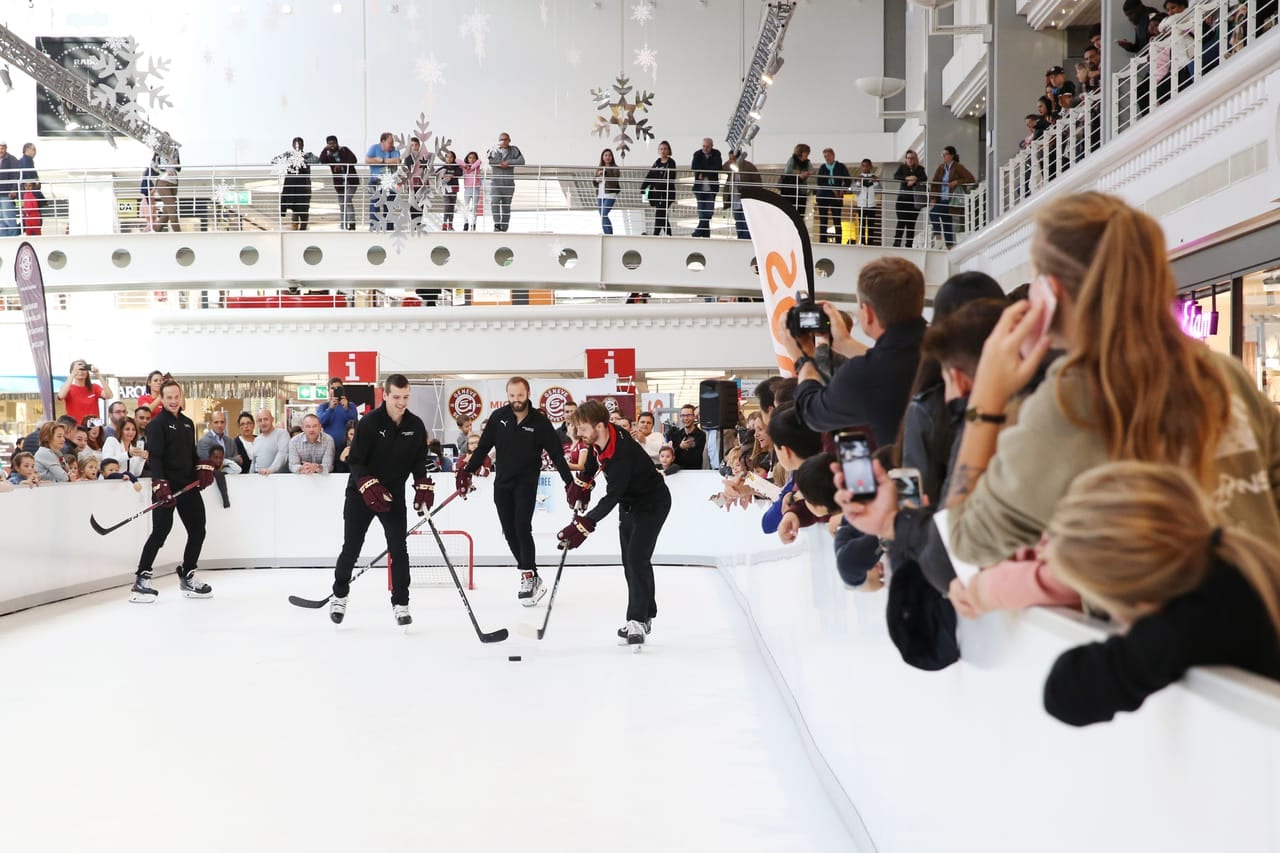
A soft surface makes skaters plough and tire, so they leave early and do not come back, and a visibly tired rink in the middle of the concourse suppresses the passer-by draw the whole thing was bought for. Advertising can be weatherproof, steady income a rink relies on year over year, but the risk follows the operation: a poorly run rink loses advertisers after season one and may be unable to replace them. And a rink that looks cheap undercuts a centre that is trying to feel premium.
Glice keeps skaters gliding and enjoying themselves, which is the full, lively rink that draws the next shopper and produces the shareable moment a centre wants online. Lower abrasion means no debris tracked across a retail floor, and an edge that holds means the rink still looks good at 6pm on a Saturday, not just at opening. That edge life holds only while skates stay on the ice or rubber matting; hard flooring or asphalt ruins it fast. With premium boards, it elevates the space rather than cheapening it. The performance is independently measured by Fraunhofer.
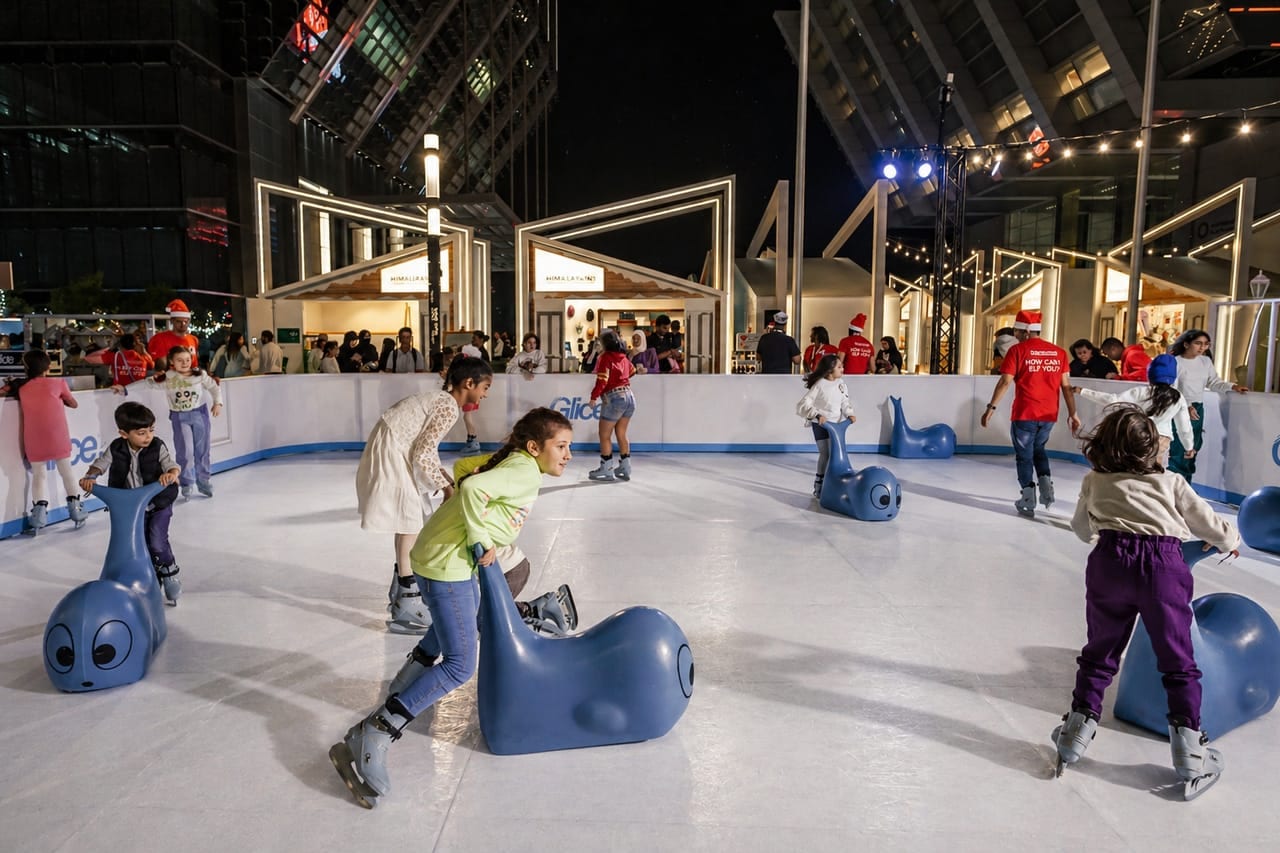
Glice costs about 20 to 30% more than regular synthetic ice, and each cost of going without the quality stands on its own. The tenant-sales lift a fuller concourse produces can cover it. So can the advertising a well-liked rink keeps. So can the sharpening a dulling surface would pile on, provided skates stay on the ice or rubber matting because hard flooring or asphalt ruins an edge fast. Any single one usually repays the premium, and the return runs through footfall, not ticket margin.
There is no verified retail footfall benchmark specific to Glice, so a centre should run these arguments against its own footfall and conversion data rather than a headline number. And location inside the centre matters: a rink tucked into a dead corner underperforms whatever its surface, and the centre's marketing has to carry more of the load.
A mall rink is bought for footfall, dwell and the lift to tenant sales, almost all of which depends on people enjoying the rink and being seen to. Regular synthetic ice rarely delivers that, and a tired rink on the concourse repels the traffic it was meant to draw. Glice's independently measured quality protects the footfall, the advertising and the premium feel, and any one of those usually repays the premium within a season.
See how Glice turns any venue into a destination. 3,000+ rinks and counting.
Free Planning Guide
Everything you need to evaluate, plan, and launch a synthetic ice rink - in one document.
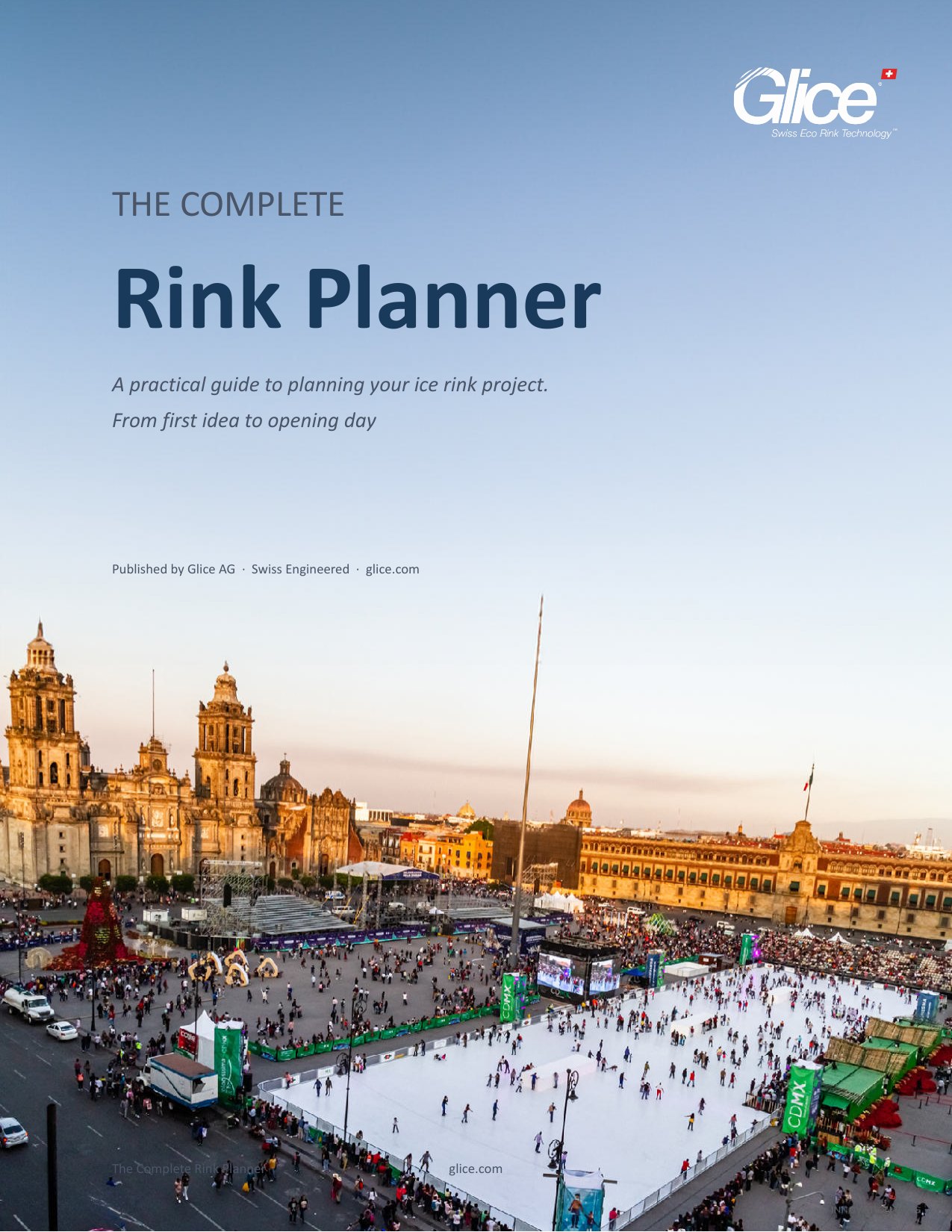
A mall is buying footfall, dwell time and a reason to visit, with tenant sales and sponsorship as downstream value. The rink must look active and inviting from the concourse. Its layout, programming and skating quality should turn spectators into participants while fitting safely into the centre’s normal operating flow.
A well-positioned rink extends visits and creates scheduled reasons for families to return. Packages with retailers, food outlets and seasonal events can convert that attention into sales. The surface must remain enjoyable and visually clean, because an empty or poorly maintained rink does the opposite and signals weak programming to tenants.
Weatherproof seasonal programming gives advertisers steady exposure a rink can rely on year over year, especially when packages connect the rink to tenant promotions and events. That reliability depends on execution. If the rink is poorly run and sponsors leave after season one, the weak performance record makes replacements difficult to secure.
The rink is intended to draw people from the concourse and give them a reason to stop. The article warns that a dead-corner location can underperform whatever surface is installed. Assess the sightlines and natural pedestrian flow along with the centre’s marketing, not just the space available for panels.
Visitors who enjoy skating have a reason to return and recommend the activity. The article contrasts that with a high-friction surface that tires skaters and makes them leave early. In a mall, the visible atmosphere also affects passing shoppers, so repeat use and an inviting rink support the wider footfall objective.
The article links dwell time with more opportunities for transactions and a stronger tenant proposition. The rink is often an attraction serving that wider objective rather than the profit centre itself. Assess its contribution through the centre’s own footfall and conversion data instead of relying only on skating-ticket margin.
A rink on the concourse is part of the centre’s visible presentation. The article warns that cheap-looking boards or a tired rink can undercut a premium setting, while a well-presented rink can elevate it. Compare appearance and operation with surface performance rather than treating boards as an incidental accessory.
Yes. The article’s sharpening and edge-life comparison assumes that skates remain on the ice or rubber matting. Hard flooring and asphalt can damage blades quickly. That matters in a retail setting, where the rink’s operating plan must keep the skate fleet working throughout busy periods rather than only at opening.
The article explicitly says there is no verified Glice-specific retail footfall benchmark. Use the centre’s own footfall and conversion information to test the proposal. Surface quality, the rink’s position and marketing can all affect the outcome, so a general percentage should not replace the site’s commercial assessment.
Look separately at tenant-sales opportunities, retained advertising and sharpening costs rather than only the rink’s ticket income. The article presents each as a potential part of the quality case. Evaluate them with the centre’s own figures, including the blade-care condition that skates stay on the ice or rubber matting.
Independent surface testing provides evidence for the performance comparison described in the article. It does not establish a universal retail revenue or attendance uplift. Use it alongside the location, appearance and operating plan, and test the financial assumptions against the mall’s own pedestrian traffic and conversion data.
The rink is continuously visible to the shoppers it is meant to attract. The article describes an active, enjoyable rink drawing the next visitor, while an empty or tired-looking one can do the opposite. Surface care, skate condition and presentation therefore matter throughout the operating day, not only for opening photographs.
Last updated: June 2026