Why synthetic ice exists
Refrigerated ice is expensive to build and expensive to keep. A refrigerated rink carries a cooling plant, a constant energy bill, water, and refrigerant gases, and it needs all of that whether ten people skate or none. For an NHL arena that cost is justified. For a hockey school, a hotel courtyard, a shopping centre, a school or a back garden, it rarely is.
Synthetic ice removes the plant. It is a solid surface, engineered so a steel blade glides across it, that you can install almost anywhere and run without freezing anything. That is the whole promise of the category: skating, without the machinery underneath it.
What synthetic ice is made of
Every synthetic ice surface starts as polyethylene, the same family of plastic used in countless everyday products, and on its own it does not glide well enough to skate on. What makes a surface skateable is the package of additives and lubricants built into it. Everything that separates a good surface from a poor one is decided by that formulation and by how the panel is made, not by the base plastic.
What happens when a blade crosses the surface
Honestly, nobody fully knows. Why ice itself is slippery has been argued by scientists for more than a century, and the same humility applies to polymer surfaces. What is clear is that a surface has to do two things at once, and both matter equally to how skating feels: it has to be hard enough that the blade does not sink into it, and slippery enough that the blade slides across it.
Put together, those two are what a skater actually feels as effort. Glide effort is friction and indentation combined: the more resistance the blade meets, and the deeper it sinks, the harder the skater has to work.
The specific way Glice delivers low friction and low indentation, a hard core carrying a thin, mobile top layer that shears under the blade, is covered on the How Glice works page.
The Skate Effort Equation
at the blade
as the blade sinks
push by push
The four parameters that decide quality
Everything you might want to know about a synthetic surface comes down to four things. One of them, a flat and even surface, is a basic expectation you should assume from any serious manufacturer. The other three, friction, indentation and abrasion, are high science, and they are where the real engineering lives. They also pull against each other, so improving one tends to worsen another, which is why they have to be developed together.
Surface friction
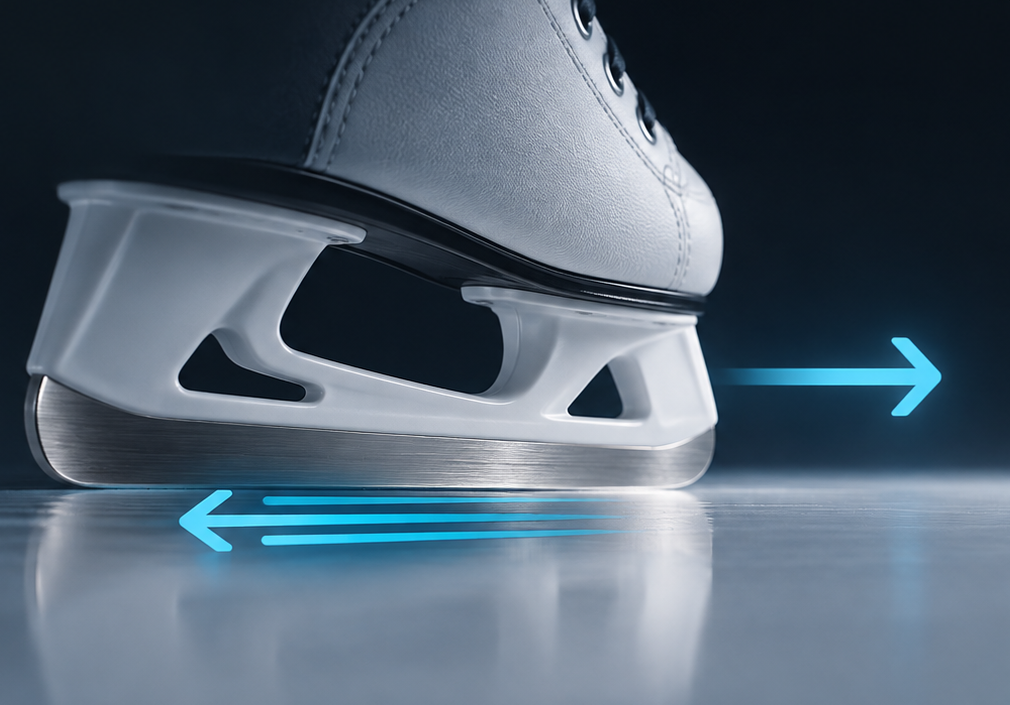
How much resistance the blade meets, and the property buyers know best and ask about most. That familiarity is the trap. No material has a single coefficient of friction. Friction is a system, not a property: it depends on two materials meeting at a specific geometry, under a specific load, at a specific speed and temperature. So a friction figure only means something when you know its test conditions and what it was compared against, whether that is real ice or another synthetic surface. On its own, a bare number tells you nothing. If a supplier quotes a friction figure and cannot give you the conditions and the comparison, it is not evidence.
Indentation
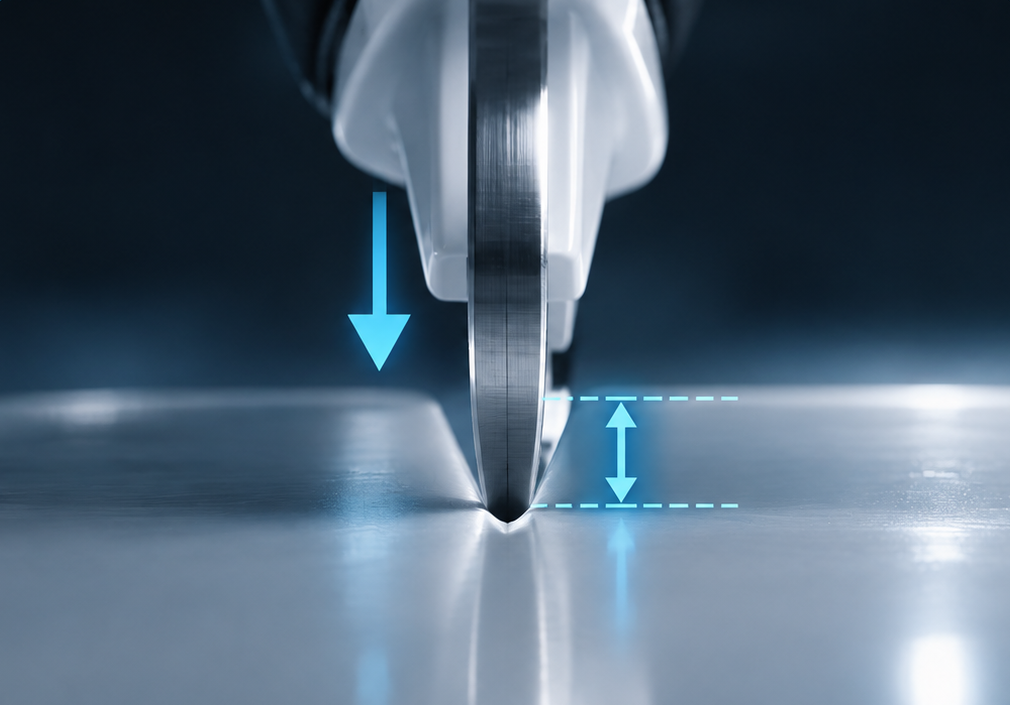
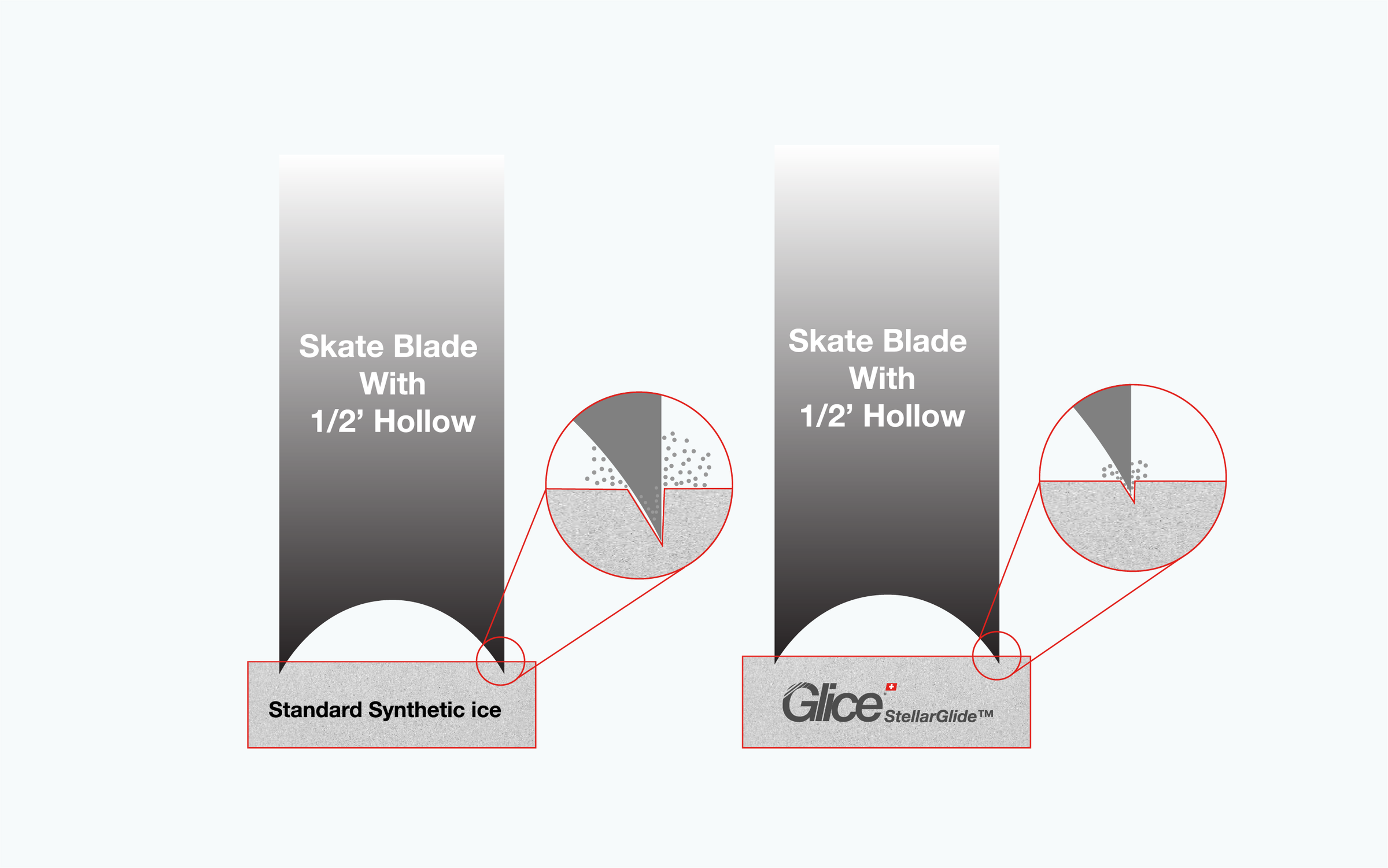
The biggest problem in the category, and the property almost nobody asks about. Practically all synthetic ice is too soft. When a surface is too soft, the blade sinks into it, and instead of gliding the skater has to push the material aside, the way an icebreaker forces its way through pack ice, with a lot of effort. That resistance has a name, deformation friction, and it costs real energy. Indentation is how far the blade sinks, measured in micrometres, and it is as decisive for glide as surface friction, even though it is the least discussed.
Abrasion
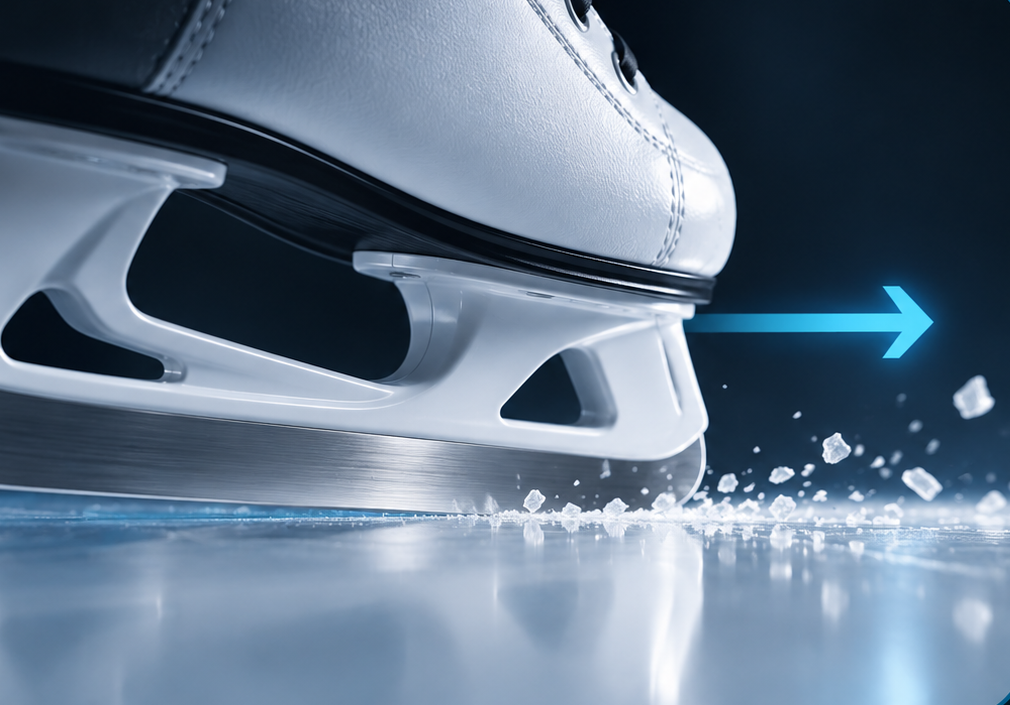
How much material the surface sheds as it is skated on, and how those shavings behave. Too much abrasion means constant cleaning and a surface that degrades. The shavings themselves can carry a static charge and cling to clothing, so how a surface manages that matters too.
A consistent, even surface, and the joints that hold it
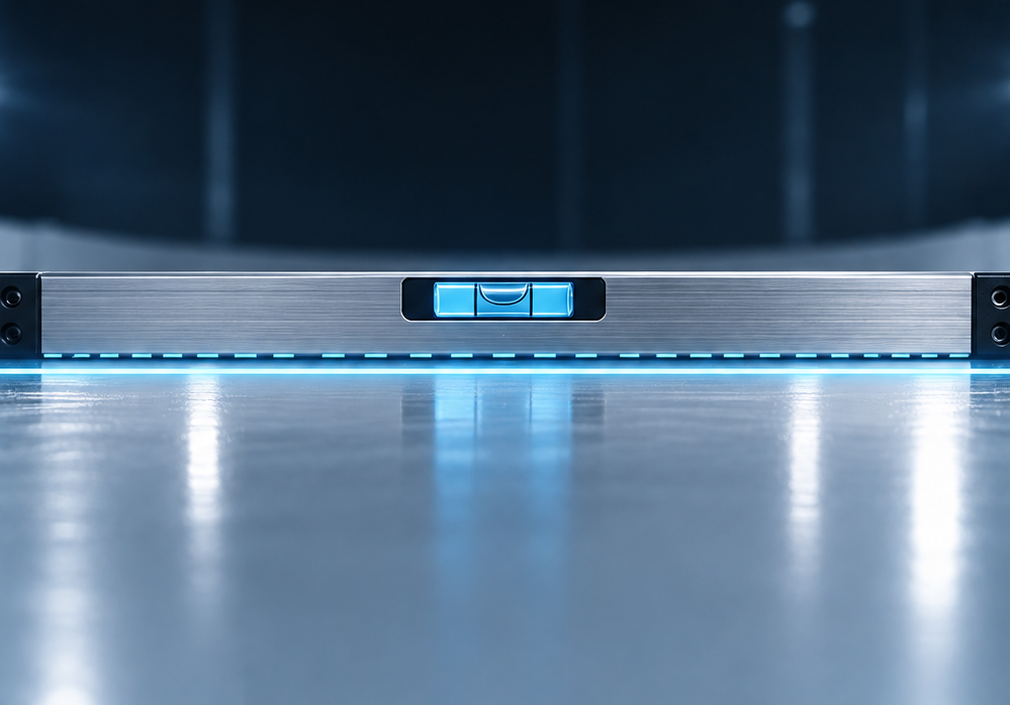
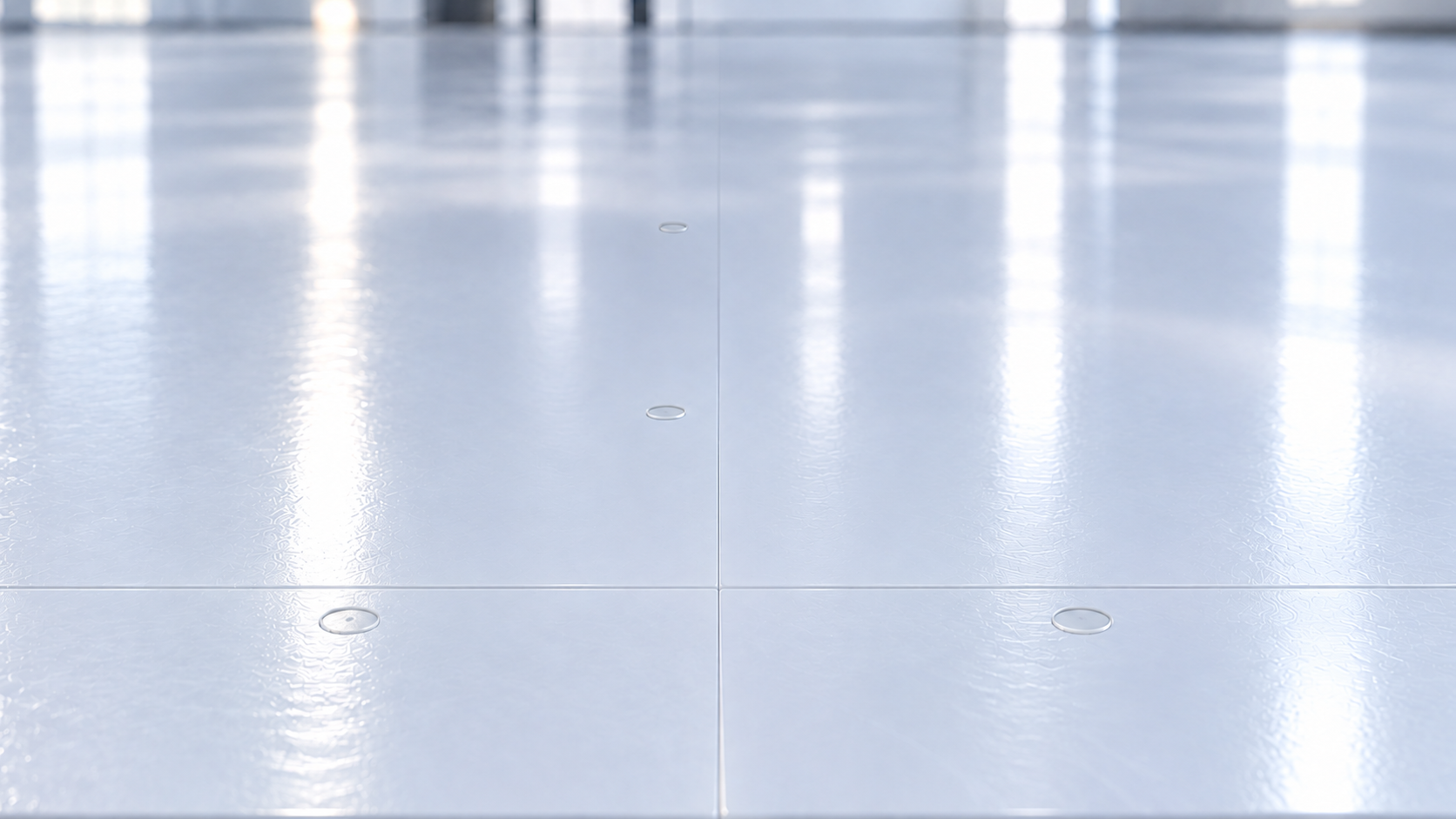
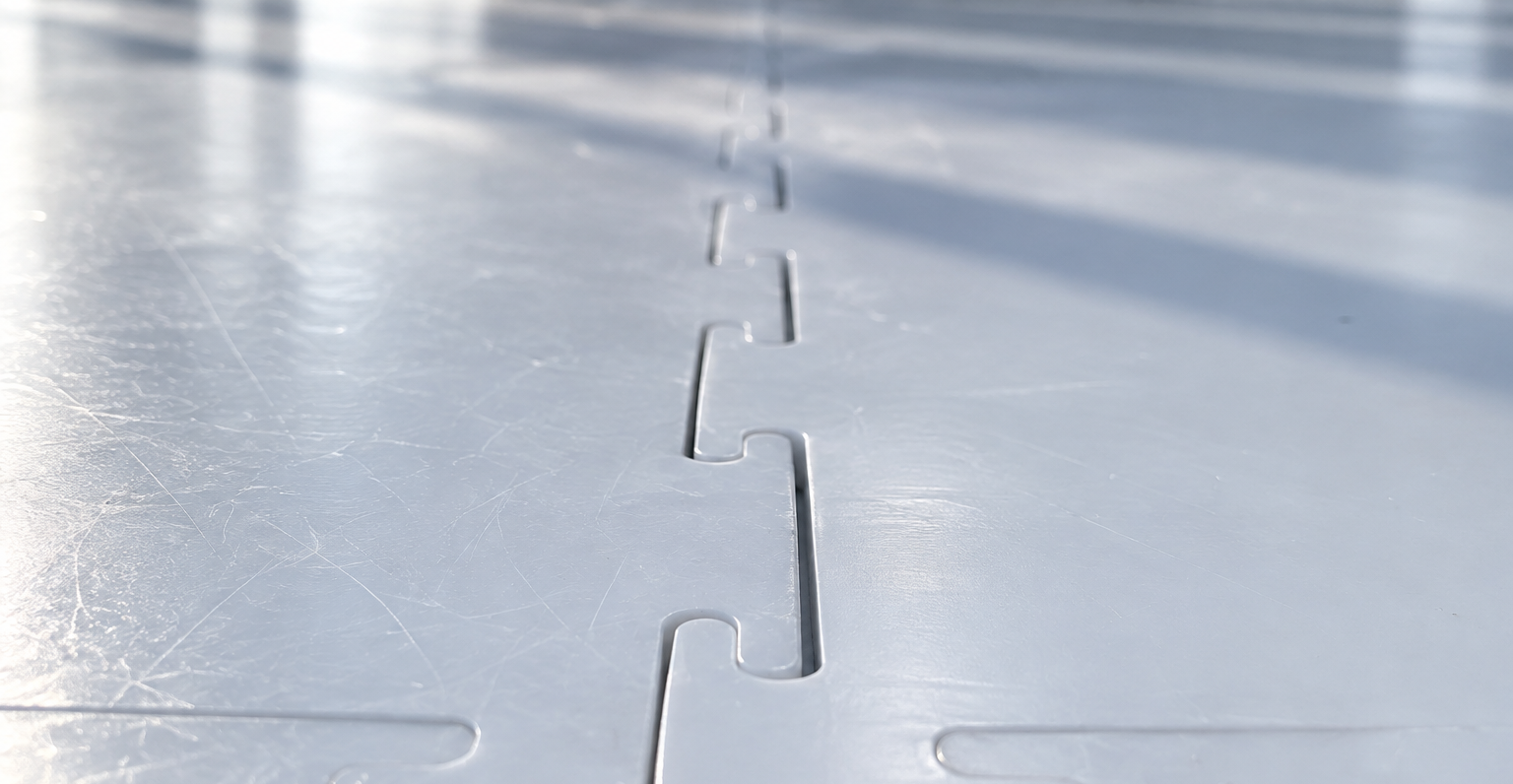
Whether the rink skates the same everywhere. Two things create it: a panel that is flat to begin with, and a joint system that holds the panels flat and level once they are down. Simple horizontal-locking joints suit home and small indoor rinks; larger, commercial and outdoor rinks need a connection system that locks both horizontally and vertically, so no lip can rise at a seam. A joint a skater can feel underfoot is a defect, whatever holds it together. This is the basic expectation rather than the science, and the full comparison of joint systems is on the Synthetic ice panel joints page.
How manufacturing changes the surface
Two panels made from identical material can skate completely differently, because the way the material is formed changes what it becomes. Pressing and extrusion produce different hardness and different abrasion, so the same recipe can end up a good surface or a poor one depending on the process. And how a panel is cooled decides whether it stays flat or warps in its second summer, which is why some panels leave the factory fine and fail a year later. This is a whole subject in itself, covered on the How synthetic ice is made page.
Claims that sound like quality but are not
Once you know the four parameters, most of the marketing in this category gives itself away. Four claims come up again and again, and each one points at the wrong thing.
Self-lubricating
Every workable synthetic surface is lubricated, because polyethylene on its own does not glide. So "self-lubricating" describes the price of entry, not an advantage. The real skill is in which lubricants and additives are used, and in what balance, chosen from thousands of possibilities.
UV protected
Suppliers often present UV protection as a feature, but it should be standard. Any polymer left in sunlight degrades without it, so its presence is expected, not special. More importantly, UV protection on its own does not mean a surface will not degrade. Yellowing and breakdown are just as often a question of additive quality and chemical stability as of sunlight. Impure or unstable additives can oxidise and discolour a panel even indoors, with no UV at all: there are documented cases of panels yellowing badly within a year inside fully enclosed facilities with no daylight whatsoever. The real protection is stable, high-quality additives from a controlled source, not a UV label.
Excellent grip
This one needs unpacking, because you do genuinely need grip. You push off against the surface to move, and without grip you cannot skate at all. But grip comes from well-sharpened blades on a surface that does not dull them, not from a surface being "grippy." In fact, because practically all synthetic ice is too soft, blades sink in too deep, which works against you. In theory even a modest surface gives good grip if the skates are well sharpened. So "excellent grip" sold as a surface feature is pointing at the wrong thing. Ultimately, whether you have grip comes down to whether the surface dulls your blades: a surface that dulls them fast leaves you with no grip.
Premium polymer
Some suppliers advertise ultra-high molecular weight polyethylene as the premium, superior choice over standard high-density polyethylene. It is finer and more expensive, and buyers reasonably assume it must skate better. It does not follow. Producers build surfaces from one grade or the other, and in pure form neither delivers top results against a skate blade. Measured against a blade rather than an industrial bearing, that grade performs worse on friction than its datasheet implies. The grade sets the raw material; the formulation is what makes a surface skate.
What measurement exists
For all the claims made in this category, there is only one independent, published comparative dataset: a study by the Fraunhofer Institute for Mechanics of Materials IWM, which measured five surfaces on the same equipment under identical conditions. It is the reference point for any honest comparison, and it is covered in full on the Fraunhofer measurement page.
Blades and sharpening
Skating dulls blades, on any surface, and how often is badly misunderstood. On regular synthetic ice, most blades go dull within ten to fifteen minutes, and practically all within an hour. Since a typical public session runs about an hour, skaters on a cheap surface lose their edge inside their own session.
Glice is the exception, and the evidence comes from operators. A world-famous, brick-themed family theme park running up to a thousand skaters a day found that in about ninety per cent of cases a blade was still fine after multiple uses. The Wallisellen figure skating club in Switzerland held an edge for one and a half to three months of training on a single sharpen. The one condition: skates have to stay on the ice or the rubber matting, because a hard floor or asphalt ruins the edge fast. The full picture is on the Is synthetic ice bad for skates? page.
Temperature, humidity and weather
Synthetic ice responds to conditions. The warmer it gets, the softer the surface becomes, which means slightly more indentation and slightly less glide; the colder it is, the harder and better it skates. Above about 30°C (86°F) the limit is usually the skater rather than the surface, since heat and sweat make skating uncomfortable well before the ice does. Refrigerated ice has the opposite weakness in the heat: it turns watery and slushy from around 17°C (63°F). Humidity and UV are covered on the Does synthetic ice work outdoors and in heat? page.
What synthetic ice cannot do
Most synthetic ice does not match real ice glide at all. The one measured exception is Glice, and only at slow speed. No synthetic surface replaces a refrigerated arena at game speed.
There is also a competition limit worth stating plainly. No international sports federation has yet homologated, meaning officially approved, synthetic ice for sanctioned competition. If your plan depends on hosting official international events, synthetic ice is not currently an approved surface for them.
And every surface, Glice included, punishes neglect. Synthetic ice is not maintenance-free. Left dirty, a surface goes greyish, the seams start to show, and it begins to drag underfoot. Skip the cleaning and care routine and it dulls blades faster and its useful life shortens. Handle the skates badly, letting people walk off the ice onto hard floors, and their edges are ruined regardless of how good the surface is. A neglected surface can even dull blades faster than refrigerated ice. The surface rewards a simple maintenance routine and penalises the lack of one, which is why maintenance is treated as its own subject under Running a successful rink project.
The panel is only half the outcome
Even a perfect surface is not a successful rink. Location, the evenness of the base underneath, staffing, marketing, and day-to-day maintenance and operation decide whether a rink thrives or empties out. That side of the story, how to actually run a rink that works, is covered under Running a successful rink project.
In short
Synthetic ice is skating without the refrigeration plant. Not all of it is the same: performance is engineered, and it comes down to friction, indentation, abrasion and an even surface. A flat surface is the baseline; the science is in the other three, and friction and indentation together are what a skater feels as effort. Ask any supplier how their numbers were measured and what they were compared against. Done right, it glides close to real ice. Done cheaply, it wears people out.